
Japan’s Farm to School meals program launched

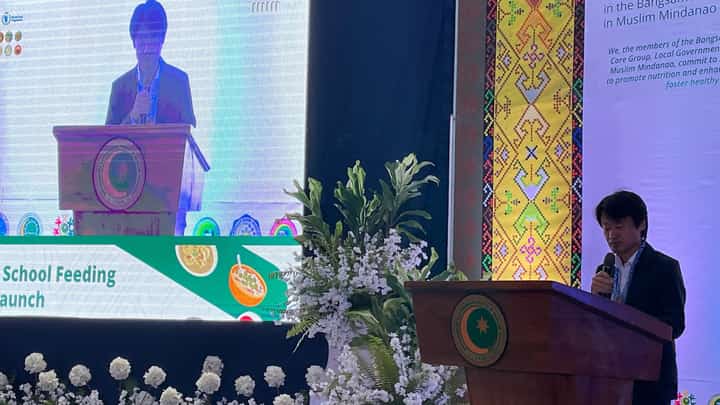
NIHEI Daisuke, minister for Economic Affairs of the Embassy of Japan in the Philippines, attended yesterday the launching ceremony for “The Project for the Promotion of ‘Farm-to-School’ Meals Program Using Locally Harvested Products in Bangsamoro Autonomous Region in Muslim Mindanao (BARMM),” alongside the World Food Program, Philippines Deputy Country Director Dipayan Bhattacharyya said.
Also in attendance were BARMM Minister of Agriculture, Fisheries and Agrarian Reform Mohammad S. Yacob; Minister of Basic, Higher and Technical Education Mohagher lqbal; and Minister of Health Dr. Kadil Sinolinding.
The Government of Japan will contribute approximately $5 million to this three-year project, which the WFP will carry out to support agricultural livelihoods, boost nutrition and food security, and improve education in BARMM.
This project seeks to establish a school meal program for targeted municipalities in BARMM to provide nutritious and diversified meals to around 10,000 students every school day; and strengthen linkages between local smallholder farmers and schools to enhance the integration of the school feeding supply chain.
In his speech, Minister Nihei emphasized the significance of ensuring that school children receive adequate nutrition to facilitate their learning, growth and achievement. He also highlighted the project’s beneficial effects on the region’s food security and economy, underscoring its advantages for local communities and farmers.