
Solidarity against solid waste
PBSP maintains a comprehensive portfolio of solid waste management initiatives.

PLASTIC arm chairs made from disposed plastic sachets are donated to schools in Luzon provinces with help from Dow Chemical Philippines and Sentinel Upcycling Technologies.
PHOTOGRAPH COURTESY OF PBSP
The Philippine Business for Social Progress (PBSP) is the largest business-led non-government organization in the country that works to reduce poverty incidence. Its 264 members have been operating the past 52 years in the field of education, environment, health, livelihood and disaster response to uplift the lives of Filipinos.
“PBSP plays a multifaceted role in promoting responsible waste management through various initiatives,” says its executive director Elvin Ivan Uy.
A total 183 projects are being undertaken with partners to achieve its objective. The innovative solutions work two ways by helping address environmental pollution while providing extra income to poor families.
The organization collaborates with The Plastic Flamingo (PLAF), a local social enterprise that collects and transforms plastic waste into a range of sustainable construction materials which can be used to build new schools, housing and typhoon shelters, together with global science company 3M and the Muntinlupa City government. The partners are trying to collect an additional 32 metric tons of plastic in one year to raise the income of waste collectors in the community and scale up PLAF’s production.
Similarly, plastic waste from Parañaque City are collected for upcycling into ecobricks and ecocast in collaboration with waste diversion and management company Green Antz and snack firm Mondelez Philippines.
PBSP has an upcycled chairs project with Dow Chemical Philippines that diverted 1,078 kilograms or 539,250 pieces of single-use plastic sachets away from landfills and oceans to Sentinel Upcycling Technologies which converted the waste into hundreds of plastic arm chairs. Dow Chemical donated 430 such chairs to nine schools in La Union, Benguet, Rizal and Zambales.
Some 90 upcycled chairs were also donated to PBSP-assisted schools.
“The purchase of 45 upcycled chairs donated to Maronquillo National High School diverted a total of 33,750 sachets or 67.5 kilos of plastic. The 45 upcycled chairs donated to San Isidro Elementary School supported the Nestlé Tibay Chairs program, which made chairs out of upcycled 70 kilos of Bear Brand packs,” according to Uy.
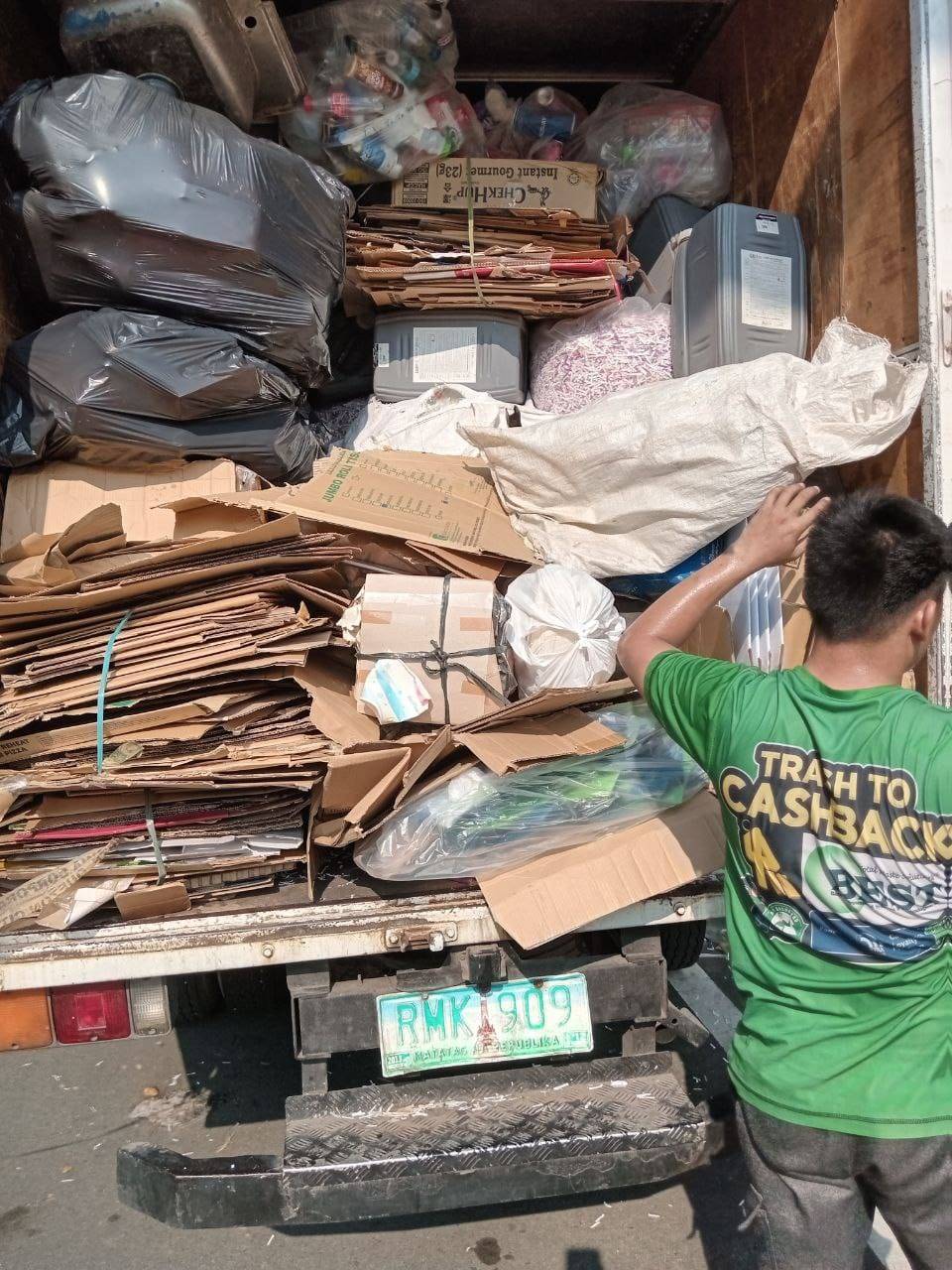
THE X-Trash Challenge project allows recyclable waste to be exchanged for environmental points that can be used in buying items for donation to select beneficiaries.
PHOTOGRAPH COURTESY OF VINCE MERCADO
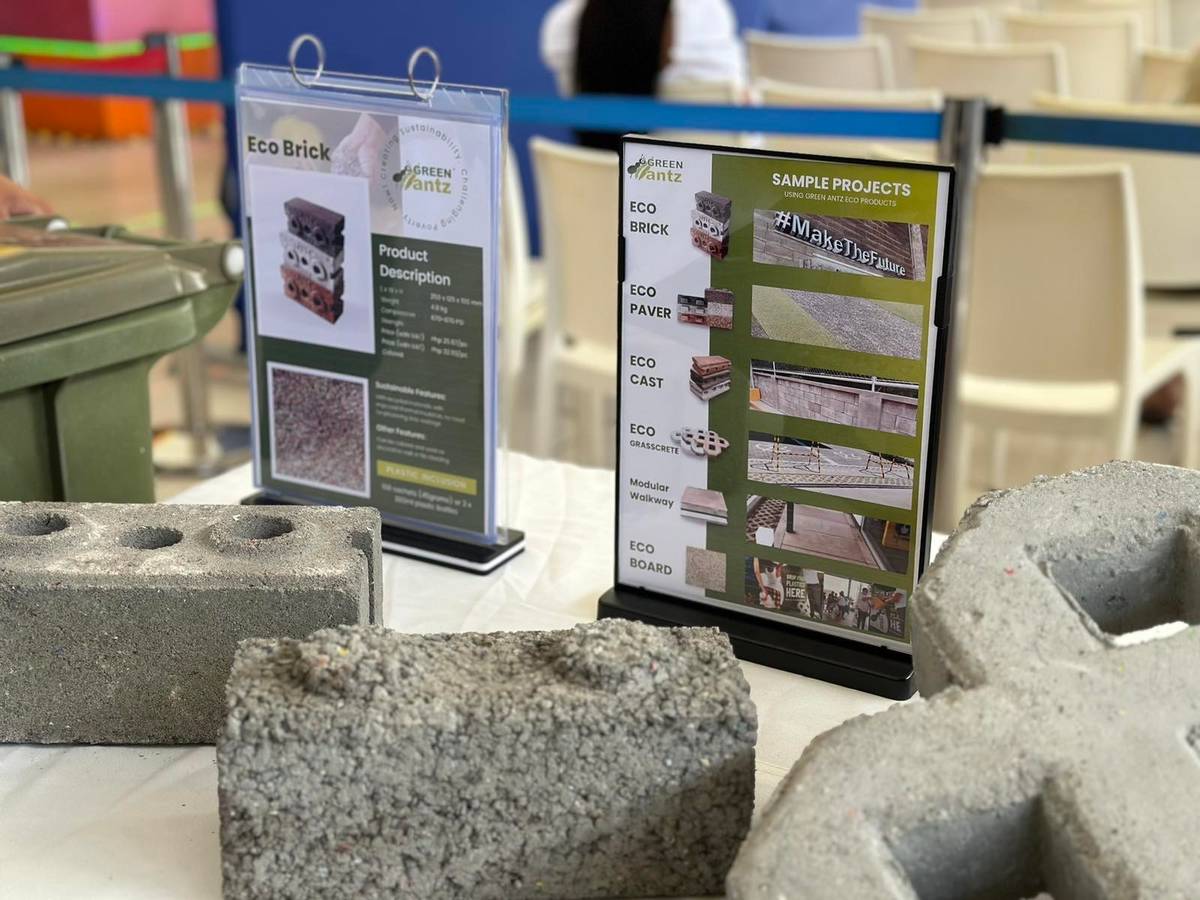
PBSP, Mondelez Philippines and Green Antz Builders build bricks made from waste plastic sachets for use in building and construction.
PHOTOGRAPH COURTESY OF GREEN ANTZ BUILDERS
A community assistance project provides various interventions on health, education, environment and livelihood to 600 waste-picker families in Sitio Pintor, Barangay San Isidro, Rodriguez, Rizal.
“PBSP adopted a total of 40 informal waste pickers from Barangay Nova Proper in Quezon City and Sitio Pintor in Montalban (Rodriguez), Rizal,” says Uy.
PBSP provides solid waste management support to Barangay Pineda, Pasig City by helping reduce marine waste from Purok 2 to 4 going to the Pasig River. The project will effectively benefit at least 30 percent of households — mainly those living near the river. Waste reclaimers engaged in the project will have additional source of livelihood for the work.
In the X-Trash Challenge, participating Metro Manila and Luzon-based companies together with Basic Environmental Systems & Technologies Inc. (BEST), PBSP engages its members and employees in promoting waste segregation and collecting recyclables. These are exchanged for environmental points during the challenge for use in purchasing items for selected beneficiaries.
There is also a community collection of marine waste project that aims to educate five coastal villages on waste segregation at source and proper waste disposal to capacitate fisherfolk organizations as stewards of the sea. The project aims to gradually eliminate the practice of dumping waste in bodies of water.
PBSP’s other partners in its waste management projects are Coca-Cola Far East Ltd., Coca-Cola Foundation Philippines, CEMEX, Unilever, Republic Cement, Evergreen Labs, Bokashi Pinoy, Holcim and Environment Friendly Timber.