
Booms, trash traps to prevent mangrove pollution
GMEC adopted five hectares of mangrove site in Sitio Pulo, Barangay Kabalutan.

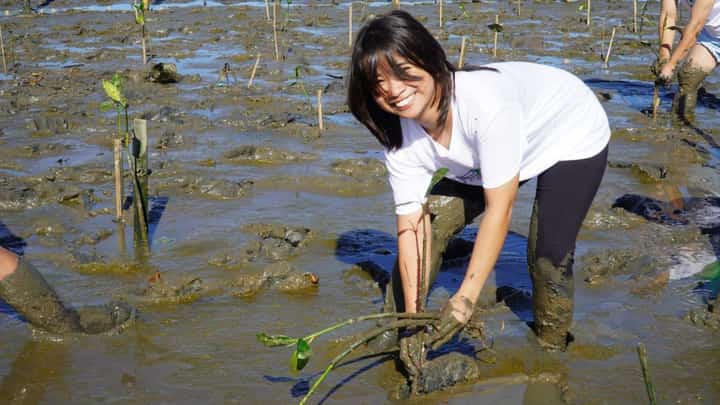
Planting propagules is not the only way to preserve and restore mangroves.
On 28 June, members of the Tubo-tubo Fisherfolks Association (TFA) laid booms made of connected empty plastic soda and water bottles on a river in Barangay Silahis, Wawa an Kabalutan in Orani, Bataan to prevent garbage from ending up in the mangrove area. The fishermen also put trash traps made up of hard plastic mesh to contain pollutants.
Assisting them were staff of Orani municipal environment and natural resources office, Bantay Dagat, Provincial Government Environment and Natural Resources Office-Bataan and GMEC.
TFA is the beneficiary under the Orani Mangrove Adoption and Protection Project (OMAPP) of the local government and energy company GNPower Mariveles Energy Center Ltd. Co. (GMEC).
GMEC adopted five hectares of mangrove site in Sitio Pulo, Barangay Kabalutan. The company will restore and sustain the mangrove serving as a storm shield and habitat for various species of flora and fauna.
Earlier, a total 13,000 seedlings were planted at the site, broken down into 12,354 Bakawan (Rhizopora), 267 Bungalon (Avicennia)s; and 385 Pagatpat (Sonneratia).
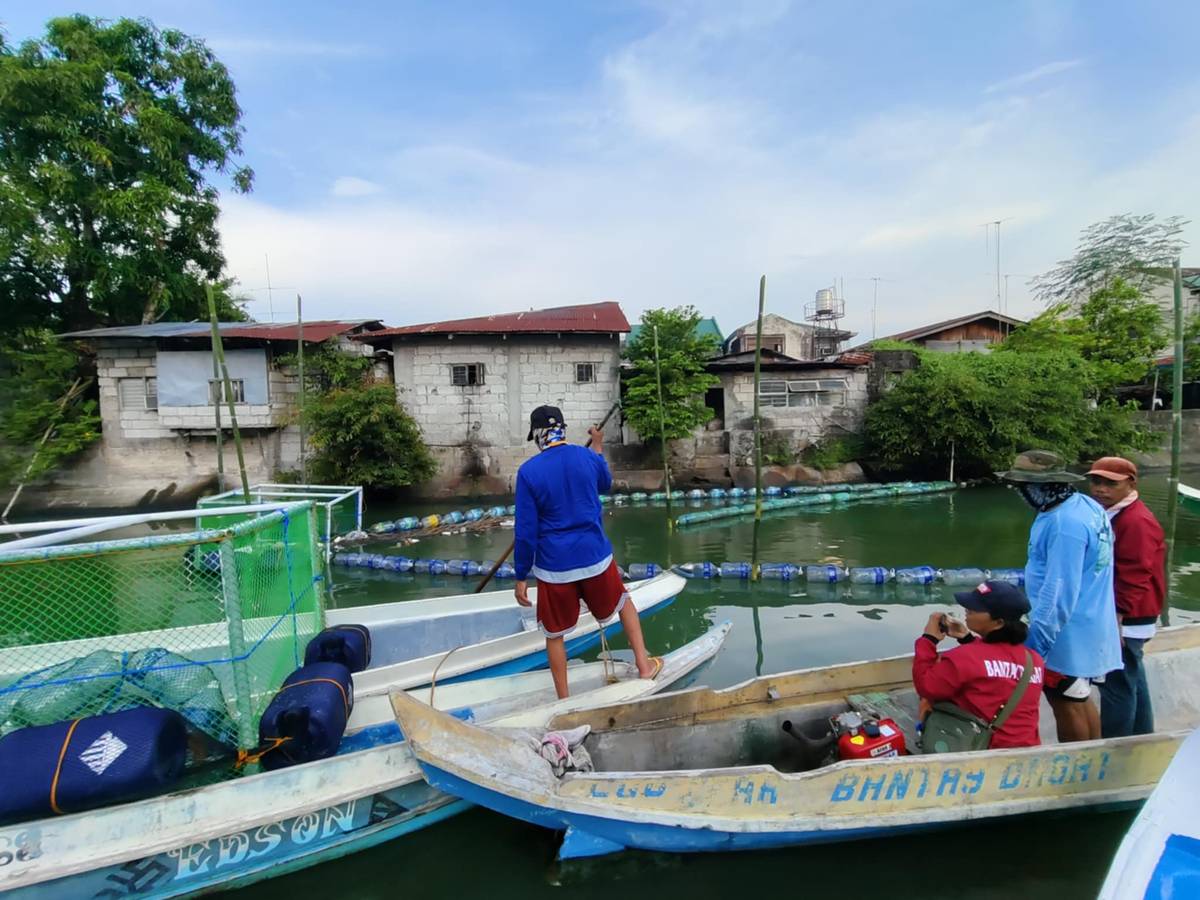
FISHERMEN place booms and trash traps on a river in Sitio Pulo, Barangay Kabalutan, Orani, Bataan on 28 June as part of the Orani Mangrove Adoption and Protection Project of the local government and GNPower Mariveles Energy Center Ltd. Co.
PHOTOGRAPH COURTESY OF TFA
According to GMEC assistant vice president for community relations Arcel Madrid, the initiative is part of the Department of Environment and Natural Resources and the provincial government of Bataan’s Project Transform.
Madrid said the mangrove project is good for five years with the company adopting an extra five hectares in the near future.
“As part of the benefit-sharing agreement, GMEC will provide the TFA with training and alternative livelihood programs. These programs will focus on plant nursery management, the basics of aquaponics, and basic life support,” Madrid said.
The training sessions are scheduled to begin this year, aiming to equip the community with new skills and sustainable livelihood opportunities.
Also last week, GMEC and GNPower Dinginin Ltd. Co. forged an agreement with the Samal town government for the protection and restoration of its mangrove area similar to the OMAPP. The signing ceremony for the agreement was done at Emiliana Hall, Tenejero, City of Balanga, according to a Facebook post of the Samal Public Information Office.