
Cope Thunder exercises launched
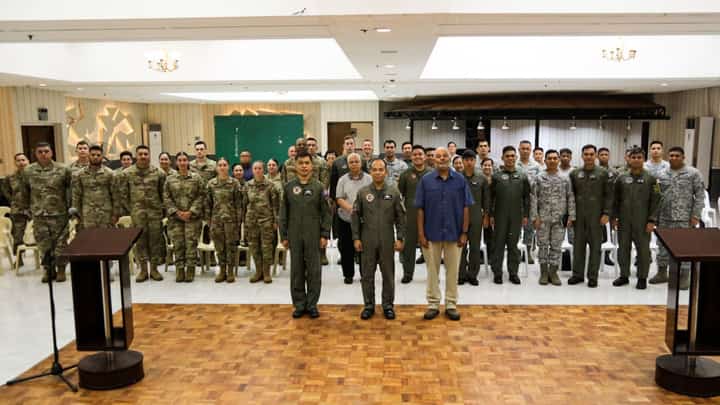
The Philippine Air Force (PAF) and the United States Pacific Air Forces (PACAF) has launched the Cope Thunder 2024-2 bilateral exercises on Wednesday following three weeks of intensive training.
Approximately 1,000 PAF personnel participated alongside their American counterparts in the drills, which focused on enhancing interoperability between the two air forces in conducting air and ground operations.
“Cope Thunder 2024-2 aimed to strengthen our ability to work together seamlessly during real-world scenarios,” said PAF spokesperson Colonel Consuelo Castillo. “These exercises ensure smooth collaboration and effective response in the event of a crisis.”
The joint training included subject matter expert exchanges, where personnel from both sides shared best practices on planning and executing various military missions, which fostered a deeper understanding of each other’s tactics and procedures, allowing for more efficient collaboration in future operations.
Cope Thunder 2024-2 built upon the success of Cope Thunder 2024-1, held earlier this year from 8 to 19 April. The first iteration primarily focused on large-scale force deployment exercises, while the second iteration expanded the scope to include a wider range of military maneuvers.
The annual Cope Thunder exercises have been a cornerstone of Philippine-American military cooperation for decades and serve as a valuable platform for both nations to improve their airpower capabilities and strengthen their ability to jointly address regional security challenges.