
House hit for approval of divorce bill

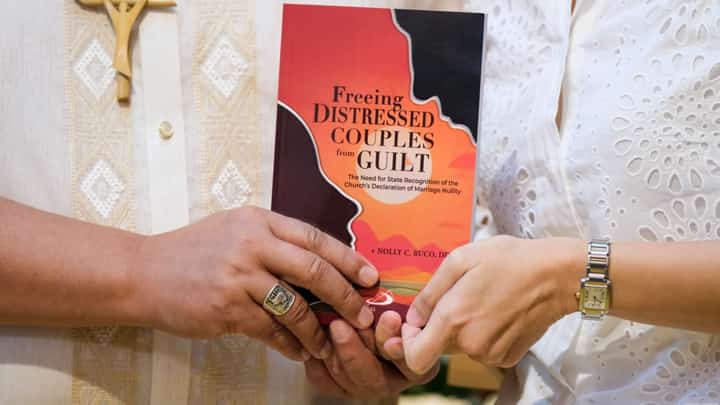
The Catholic Bishops Conference of the Philippines (CBCP) on Thursday hit the House of Representatives for its approval of absolute divorce on third and final reading.
Fr. Jerome Secillano, spokesperson of CBCP, claimed that the bill is “a betrayal of their constitutional mandate to uphold marriage and the family.”
“The fact remains that divorce is not the ultimate solution to problematic unions,” Secillano said.
The priest also noted that there are already available remedies for those who can no longer stay in their marriage.
“We already have existing legal remedies to couple separation, and yet Congress decided to add more,” he added.
The House of Representatives on Wednesday approved on the third and final reading a bill that will legalize divorce in the Philippines.
With a vote of 126-109 and 20 abstentions, the chamber passed the bill seeking to institute absolute divorce as an alternative means of dissolving an irreparably broken or dysfunctional marriage in the country.
The bill stipulates the grounds for absolute divorce, which include psychological incapacity, irreconcilable differences, domestic, or marital abuse, when one of the spouses undergoes a sex reassignment surgery or transitions from one sex to another, and separation of the spouses for at least five years.
The grounds for legal separation under the Family Code of the Philippines can also be considered grounds for absolute divorce.
These include:
* Physical violence or grossly abusive conduct directed against the petitioner, a common child, or a child of the petitioner
* Physical violence or moral pressure to compel the petitioner to change religious or political affiliation
* Attempt of respondent to corrupt or induce the petitioner, a common child, or a child of the petitioner, to engage in prostitution
* Final judgment sentencing the respondent to imprisonment of more than 6 years
* Drug addiction, habitual alcoholism, or chronic gambling
* Homosexuality of the respondent;
* Contracting by the respondent of a subsequent bigamous marriage
* Marital infidelity or perversion or having a child with another person other than one's spouse during the marriage
* Attempt by the respondent against the life of the petitioner, a common child, or a child of the petitioner; and
* Abandonment of petitioner by respondent without justifiable cause for more than one year
This is the second time that a measure seeking to legalize absolute divorce in the Philippines was approved in the House of Representatives.
The first time being in 2018 during the 17th Congress, after which it eventually died upon reaching the Senate.
With the House's approval of the divorce bill, it will be sent to the Senate for deliberation.
The Philippines is the only country in the world, apart from Vatican, that has not legalized divorce.