




Marcos to military: Prepare for digital warfare
‘We must be prepared to fight false narratives, disinformation, and digital operations that seek to sow conflict (against us) and among us.’

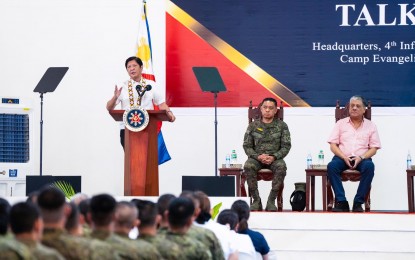
‘We must be prepared to fight false narratives, disinformation, and digital operations that seek to sow conflict (against us) and among us.’
President Ferdinand Marcos Jr. instructed the military to keep the momentum in their operations until all areas of the country are completely cleared of terrorist influence in the face of the new threat of digital warfare.
In his latest talk to the troops Thursday, Marcos directed the military and other security groups to sharpen their abilities to counter “new threat forms.”
“Times are changing and we are facing new threats to our nation’s security. The battlefield is changing. It will go beyond traditional war fighting as we have known it,” Marcos said.
“We must be prepared to fight false narratives, disinformation, and digital operations that seek to sow conflict (against us) and among us,” he said.
The President warned that the country’s adversaries may be lurking in the shadows or breaking into the very institutions and communities that the government is working to defend.
He said the administration will not back down and will take counteractions to foil any evil plans and initiatives.
Citing the value of development in the struggle against the communist insurgency, Marcos said the government has so far invested P5.3 billion in 758 projects spread over 356 barangays.
Infrastructure, road, water, school, and health facility projects are among them, he said, of which more than 78 percent have been considered completed.
Marcos declared that the Enhanced Comprehensive Local Integration Program (E-Clip) of the government has been successful in helping former rebels in the Caraga and Northern Mindanao regions return to the fold of the law.
Eighty percent of those enrolled have benefited since last year from financial support, training for a living, and — above all — educational chances, he said.
“Because of your efforts, those whom we considered our adversaries before are now (helping to) build their communities instead of destroying those communities,” Marcos said.
“It will ensure peace in formerly conflict-affected areas and prevent communities from falling back into the trap of armed conflict,” he added.
Three decades after the Marcopper mining disaster devastated Marinduque’s waterways, the province is again pressing the…
Housing is probably the biggest issue affecting people the world over.
Malacañang on Monday called for a more thorough investigation into the questioned flood control projects in Taguig…
The defense on Monday backed the move by senator-judges to exclude a prosecution witness who testified on the firearms…
