
Sessions enhance appreciation for heritage and vernacular architecture in Bohol
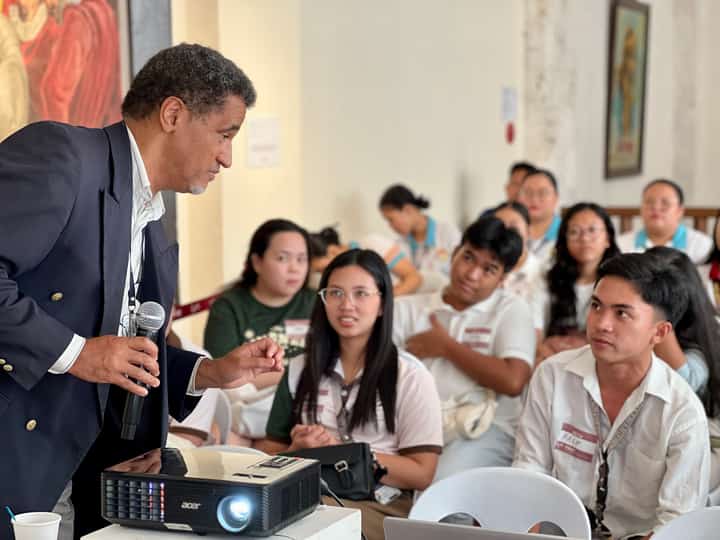
The Cebuano word piskay meaning “brilliant” or “clever” is often used to describe art or design in an admiring way. But there is more to the word as it is used to describe the building traditions of our ancestors — from their legendary “dancing houses” and bahay na bato to the so-called “earthquake baroque” of Catholic churches in the Philippines.
Bohol, which has the only United Nations Educational, Scientific and Cultural Organization (UNESCO) Global Geopark in the country, is like an outdoor museum with its numerous magnificent wooden and stone structures, making it one of the provinces with the most declared and protected centuries-old heritage buildings established in the colonial era.
Over the years, the National Museum of the Philippines (NMP) has been one of the government agencies leading in the documentation, promotion and conservation of these notable works of engineering and architecture. These structures have been damaged and become vulnerable to the elements, neglect and indifference. In 2013, a number of them were partially damaged or completely destroyed because of the 7.2-magnitude Central Visayas earthquake and the super-typhoon “Yolanda.” In collaboration with the church and other agencies, the NMP embarked on an eight-year heritage restoration and reconstruction project of 15 cultural properties in Bohol, a first in our country.

A visit to Casa Rocha in Sitio Ubos.
Photographs courtesy of NMP-Bohol
NMP remains diligent in, among other things, promoting awareness on the fragility of such built heritage. In October 2021, it acquired Casa Rocha, one of the five remaining heritage houses in Tagbilaran City, and believed to be the oldest surviving house in Bohol. A two-story structure, built in the historic sitio of Ubos where trade and commerce once thrived, Casa Rocha’s architecture shows elements of arquitectura mestiza, which involves a hybrid traditional method of Spanish colonial construction, using natural stones for the lower floor and lighter wood material for the upper floor.
After the acquisition, initial conservation works were conducted with plans of making it an extension of the National Museum of the Philippines-Bohol. In December 2023, the first phase of its rehabilitation began.
Completion is targeted in the first quarter of 2025. This project of the NMP serves as spark for the creation of a heritage complex that includes the other four remaining houses.
Last 17 April, in celebration of the International Day of Monuments and Sites every 18 April led by UNESCO and ICOMOS (International Council on Monuments and Sites), NMP-Bohol organized “Piskay: Sessions on Philippine Vernacular Architecture.”
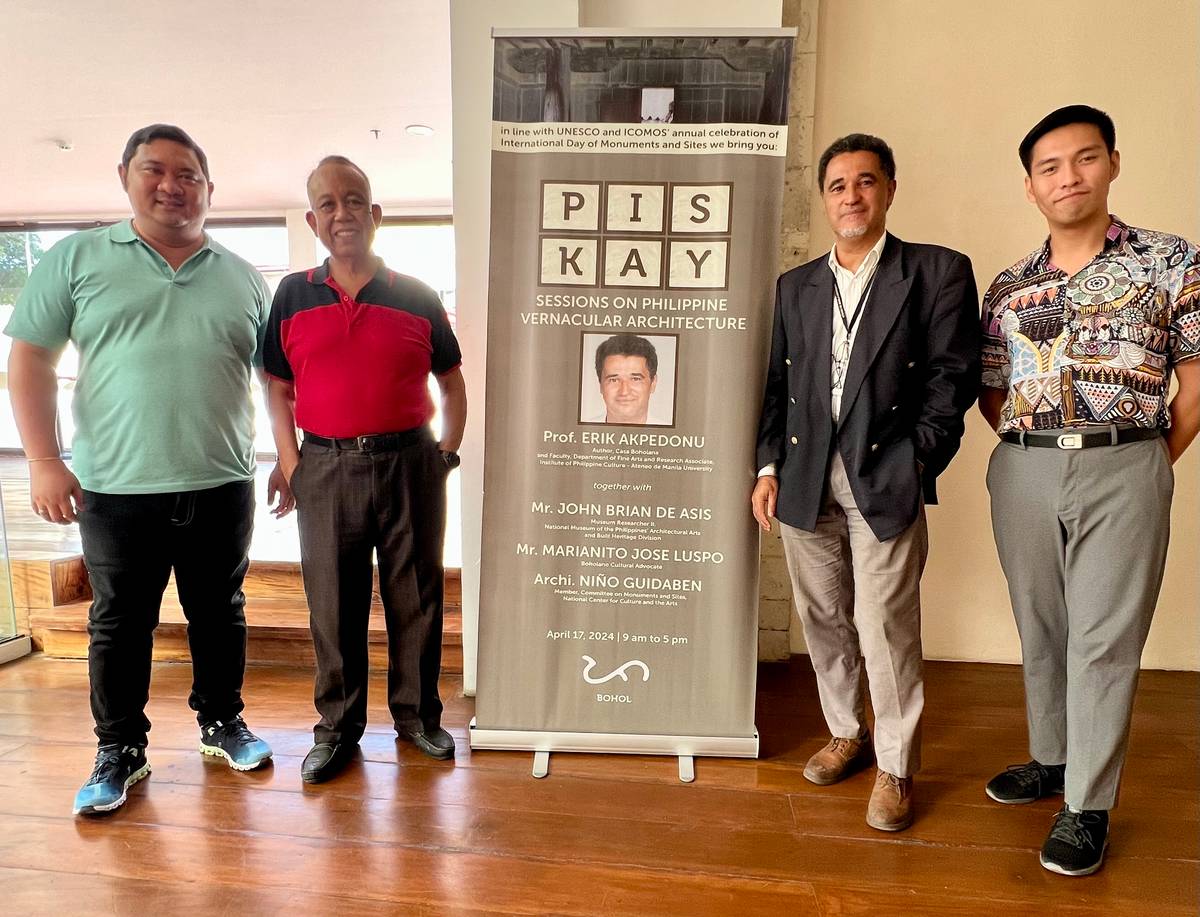
Speakers of the ‘Piskay’ event.
The event’s key speaker was professor Erik Akpedonu, co-author of Casa Boholana and a Department of Fine Arts research associate, Institute of Philippine Culture of the Ateneo de Manila University.
This free whole-day event was specially organized for the academe offering Fine Arts, Architecture and Engineering courses in Bohol. Also among the presenters were Marianito Jose Luspo, a Bohalano cultural advocate; and architect German Janus Niño Guidaben, a member of the National Committee on Monuments and Sites of the National Commission for Culture and the Arts.
The sessions highlighted the distinctiveness of heritage houses that are still existing around the country and that are often overlooked and unappreciated by Filipinos. The speakers told the student attendees about the relevance of these structures to our culture, as well as increased their awareness on the conservation of heritage.
Guidaben discussed adaptive reuse or the repurposing of old structures for new uses, as can be seen in several museums in the Philippines and many historical buildings around the world. Participants were also afforded a glimpse of the ongoing restoration of the Casa Rocha with John Brian de Asis from NMP’s Architectural Arts and Built Heritage Division.