
Judiciary’s facilitated naturalization training held
Supreme Court Associate Justice Ramon Paul L. Hernando, chairperson of the Special Committee on the Facilitated Naturalization for Refugees and Stateless Individuals, encourages the participants of the training on the rule on facilitated naturalization of refugees and stateless persons to familiarize themselves with it and relevant legal frameworks.
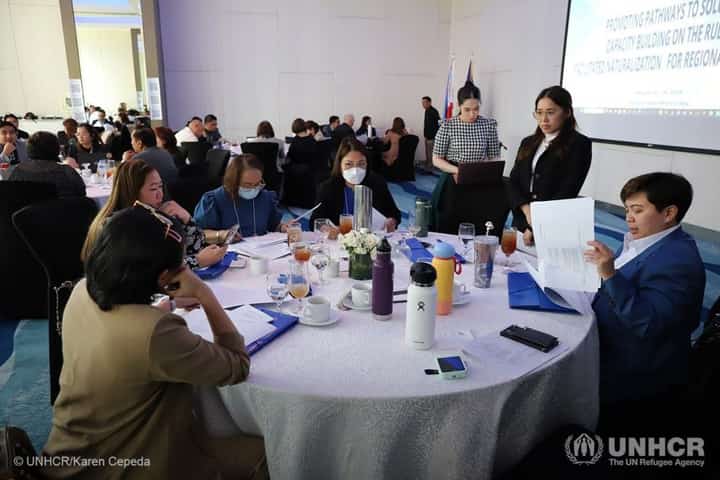
This is exactly two years after the media launch of the said rule the Supreme Court, through the special sommittee and the Philippine Judicial Academy, in collaboration with the United Nations High Commissioner for Refugees Philippines (UNHCR), held the inaugural training on the rule on facilitated naturalization of refugees and stateless persons recently at the Sheraton Manila Bay Hotel.
The training aimed to enhance the capacity of members of the Judiciary. Led by resource speakers from the Supreme Court and the Special Committee on the Facilitated Naturalization for Refugees and Stateless Individuals, UNHCR, the Department of Justice — Refugees and Stateless Persons Protection Unit, the Office of the Solicitor General, and Community and Family Services International, the sessions were designed to enhance the capacities of judges to render fair and legally sound judicial decisions in naturalization cases, while taking into account the refugees and stateless persons’ circumstances and vulnerabilities.
Associate Justice Hernando reminded the 34 judges-participants of the collective responsibility of the members of the Judiciary to “apply the rules with utmost diligence and understanding of its legal foundations.”
He said, “the Rule exists in an intricate web of international conventions, treaties, and laws, which are all aimed at refugee protection and addressing statelessness.
Hernando added that as judges, it is essential that we familiarize ourselves with these legal frameworks and draw upon them in our adjudicative processes… Our decisions hold the power to transform fear into hope, uncertainty into security, and adversity into opportunity.”