
One Meralco Foundation’s solar electrification empowers indigenous coffee farmers in Bukidnon
Brewing a more sustainable future


One Meralco Foundation (OMF) President Jeffrey O. Tarayao (third from right) turned over to Milalittra Farmers Agriculture Cooperative (MILFACO) a solar photovoltaic system that will energizate the cooperative’s post-harvest coffee bean processing facility. Also present during the ceremonial turnover were Agricultural Cooperative Development International and Volunteers in Overseas Cooperative Assistance (ACDIVOCA) Country Manager Melissa Alado (first from left), Talakag Municipal Administrator Alberto Bigcas (second from right) and OMF Program Manager Patrick Famisaran (rightmost).
A coffee farmers’ cooperative in the mountainous community of Talakag, Bukidnon has received a much-needed boost for their livelihood through One Meralco Foundation (OMF), the social development arm of Manuel V. Pangilinan-led Manila Electric Company (Meralco), following the energization of the group’s post-harvest coffee bean processing facility using solar power.
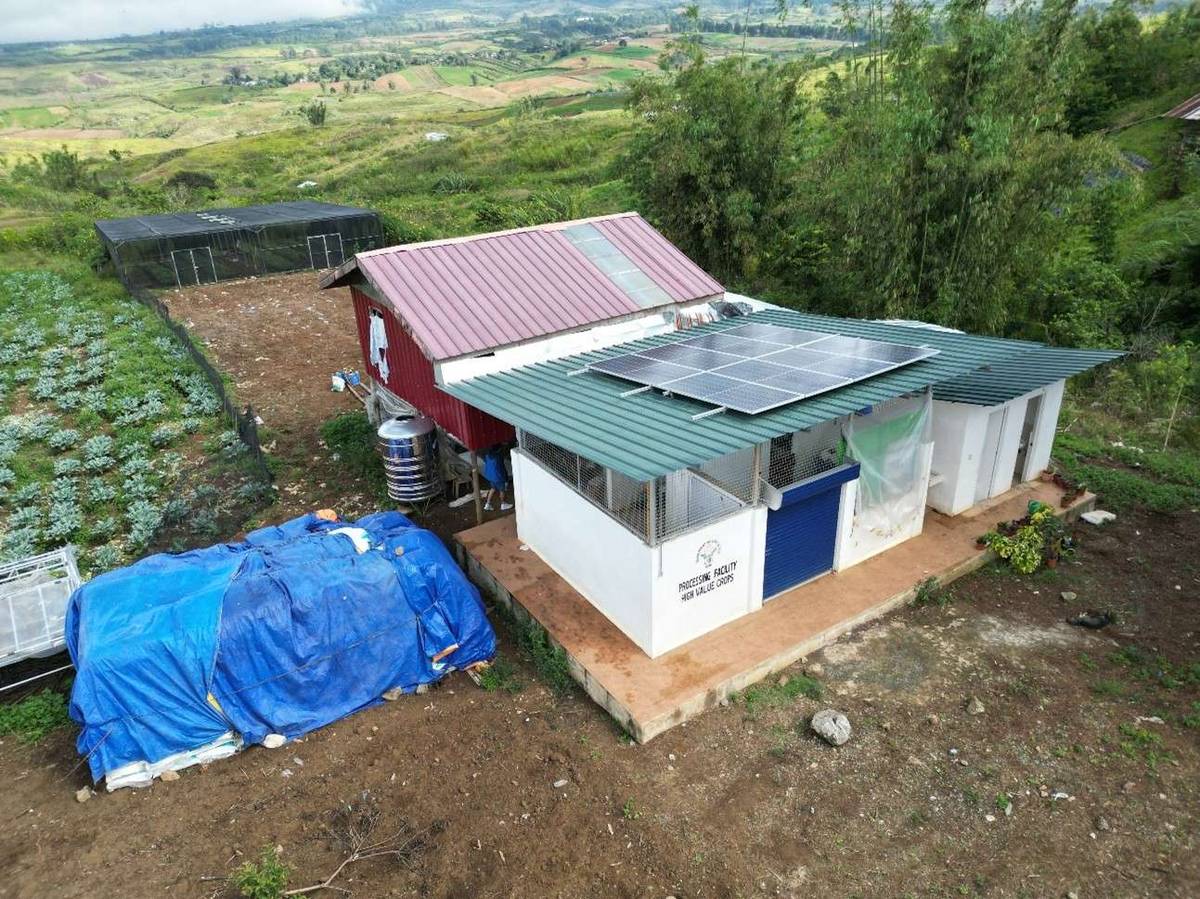
One Meralco Foundation donated a 5-kilowatt solar photovoltaic (PV) system to energize the post-harvest coffee bean processing facility of the Milalittra Farmers Agriculture Cooperative (MILFACO) in Talakag, Bukidnon.
The 150 members of the Talaandig tribe who farm coffee beans for a living are now benefitting from the 5-kilowatt solar photovoltaic (PV) system donated to the Milalittra Farmers Agriculture Cooperative (MILFACO), whose members are from the Miarayon-Lapok-Lirongan-Tinaytayan-Talaandig Tribal Association, Inc. (MILALITTRA), one of the indigenous groups of Bukidnon.
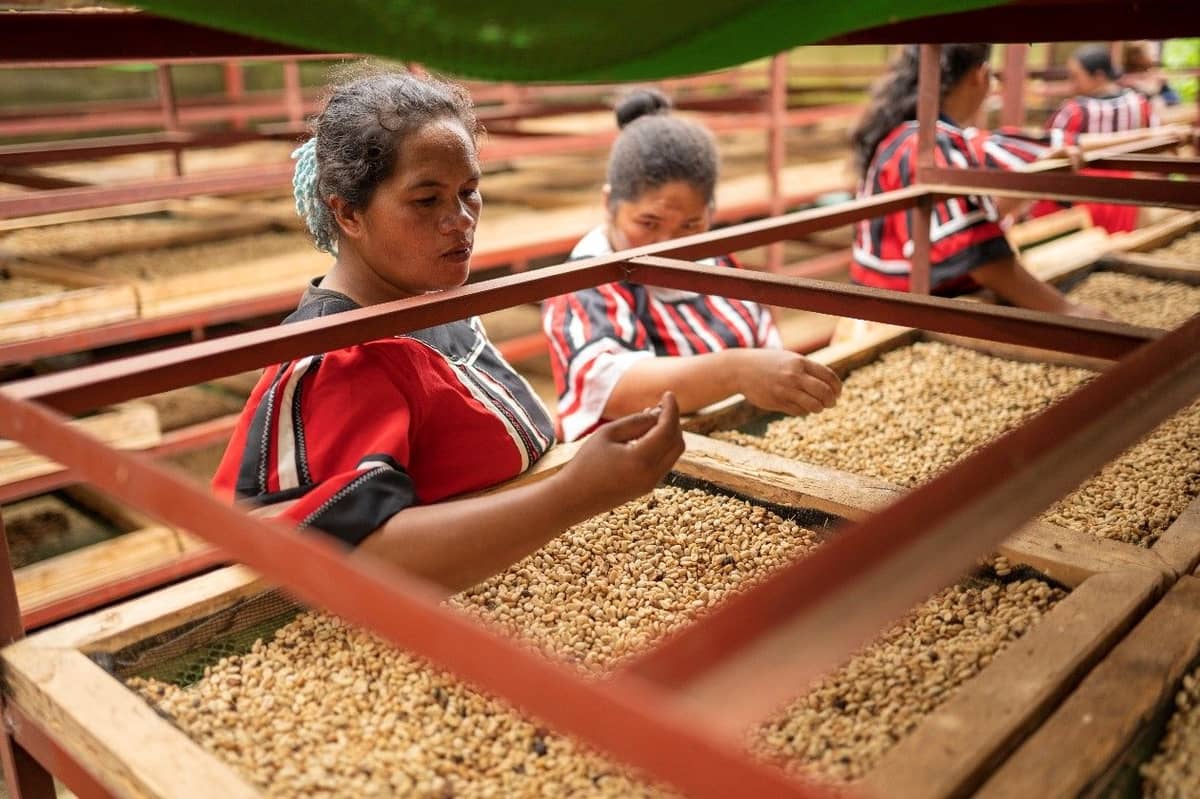
Members of the Talaandig tribe process the depulping of fresh coffee beans of Milalittra Farmers Agriculture Cooperative. The depulper machine is powered by One Meralco Foundation’s solar PV system. With efficiencies brought about by processing machine powered by a solar PV system under OMF’s Agriculture and Livelihood Electrification, MILFACO increased productivity thereby increasing their income by 43%.
MILFACO—which consists of 100% Talaandig tribe members—is known for its award-winning coffee beans, having been cited as one of the best for washed processed coffee by the Philippine Coffee Quality Competition.
Prior to OMF’s support, the lack of proper light source limited the tribe members’ productivity period as they could only sort coffee cherries while the sun is up, making sorting hundreds of kilos of cherries daily an extremely challenging task. The lack of electricity also hindered their processing activities as they had to resort to manual coffee grinding, which also affected their production.
Through OMF’s agriculture and livelihood electrification program, rural cooperatives, and community organizations like MILFACO are given an opportunity to improve their micro-enterprise through solar PV systems.
“With electricity, our coffee beans will be of high quality and we can find the right buyers at a right price point. When we get to sell our products at a higher price, we can offer a higher sum at a farmer level when buying their coffee cherries. The electrification has helped us give justice to the hard work of our coffee farmers,” says Joannah P. Dumaquita, General Manager of MILFACO.
As beneficiaries of the electrification program, the Talaandig coffee farmers can now run their pulping machine for four hours — an essential step to post-harvest production. Instead of manually pulping coffee cherries for 10 minutes per kilo or 100 grams per minute, the machine can help them pulp 60 kilos per hour or one kilo per minute, according to Jose Ebron, Cooperative Specialist for Partnerships and National Enabling Environment of Agricultural Cooperative Development International and Volunteers in Overseas Cooperative Assistance (ACDIVOCA).
ACDIVOCA, which implements the United States Agency for International Development (USAID)-funded Cooperative Development Program (CDP), has been steadfast in linking its beneficiary cooperatives to OMF, supplementing their program objectives through renewable energy electrification.
Nowadays, the cooperative can accommodate around 300 kilos of fresh cherries per day. Given good harvest and continuous coffee cherry supply, they can produce more than 1,200 kilos of green coffee beans to be sold to markets per month, which can generate forecasted sales of about Php720,000 a month or Php600 per kilo. Not only is it a boost for potential income, but this also paves way for an inclusive and participatory community livelihood for the rest of the tribe members.
“Through this initiative, the convergence of resources and network from the shared objectives of partners amplify social and environmental benefits especially to Indigenous peoples. We have proven that through the cooperative, innovation can even thrive at the most basic communities by co-creating solutions with the Talaandig tribe and One Meralco Foundation, solutions that align with their value of oneness with nature and environment,” says CDP Philippines Country Director Melissa Alado.
For his part, OMF President Jeffrey O. Tarayao shares: “Through our years of implementing community electrification programs, we have discovered and realized that many in these last-mile communities are still left wanting basic services. Lack of electricity continues to be a perennial hurdle to progress which many communities especially in rural Philippines deserve.
“Through our Agriculture and Livelihood Electrification, we have witnessed that solar power is not only a fundamental tool for productivity but also a great equalizer to enable last-mile Filipinos to become productive actors of their community and country,” he adds.
The installation of the solar PV system was also made possible by the generosity of Meralco employees who rallied together to help the electrification initiative in Bukidnon. A total of Php 560,676 funds were raised from employee donations and support from Meralco Employees Savings and Loan Association, Inc. (MESALA) and Meralco Customer Retail Services (CRS).
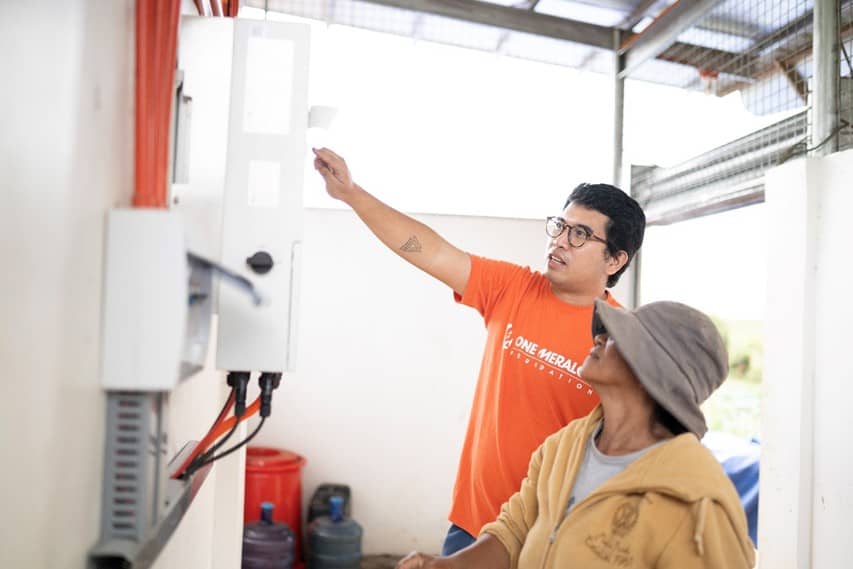
Part of OMF’s donation of the solar facility was to train and orient MILFACO members on how to maintain and manage the system themselves.
The agriculture and livelihood electrification program is part of OMF’s electrification for development portfolio. This includes solar electrification of schools, water access points and rural health centers in off-grid communities in the Philippines. To date, OMF has energized 300 schools, four rural health centers, three water access facilities, and three agriculture and livelihood facilities.
As a contribution to the universal aspiration of sustainability and inclusive growth, electrification for development aims to bring the benefits of electrification to those who need it the most.
“One Meralco Foundation’s work is an ever-evolving journey to understand the daily realities of Filipinos in need, address their gap and initiate interventions to better their situation. The community electrification program is a testament that we are ready to support them until they are able to stand on their own and become agents of change for others,” concludes Manuel V. Pangilinan, Meralco Chairman and CEO.