




Marcos bares suggestion to Metro Manila's severe traffic problem

Text size
Three decades after the Marcopper mining disaster devastated Marinduque’s waterways, the province is again pressing the…
Housing is probably the biggest issue affecting people the world over.
Malacañang on Monday called for a more thorough investigation into the questioned flood control projects in Taguig…
The defense on Monday backed the move by senator-judges to exclude a prosecution witness who testified on the firearms…
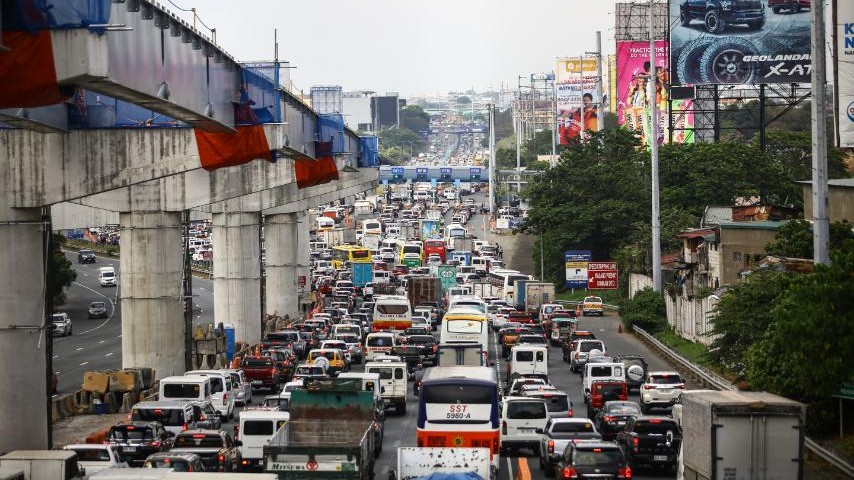
President Ferdinand Marcos Jr. said that the traffic congestion in Metro Manila is a "severe problem" that requires a "comprehensive, holistic approach" for a solution that includes developing the National Capital Region's (NCR) neighboring provinces.
In his Vlog No. 257 posted on his official YouTube page on Sunday, Marcos acknowledged the daily struggles Filipinos face with Metro Manila's notorious traffic congestion.
"Traffic is one of the most severe problems in our country. Sadly, it's a part of every Filipino's life, and we cannot deny that traffic here in the Philippines is notorious worldwide," Marcos said.
"Several administrations have attempted solutions, and while some infrastructure projects have been successful, they haven't completely solved the problem. But we haven't stopped searching for solutions," the President said.
Marcos said large-scale infrastructure projects connecting Metro Manila to Bulacan, Pampanga, Cavite, and Laguna are underway, along with improvements to roads, bridges, and airports in these areas.
This, according to the President, will incentivize people to live and work in less congested areas, ultimately easing traffic flow within the National Capital Region.
The President acknowledges the temporary inconvenience these projects may cause but assures the public that they will ultimately improve traffic flow.
"We should consider that we won't immediately feel the effects of this tomorrow because it's really on a large scale, and sometimes it even adds to the traffic today, so just be patient, but once it's completed, expect our situation to improve," Marcos said.
In a recent Cabinet meeting, Marcos directed government agencies to provide their proposals on adapting and arranging their workplaces.
As stated by National Economic and Development Authority (NEDA) Secretary Arsenio Balisacan, Marcos emphasized the need for a thorough and integrated strategy in tackling the traffic issue, contrasting it with the fragmented methods of past administrations that seemed to yield lesser results.
