




Four Moscow attack plotters arrested
Russian authorities had previously announced the arrests of 12 people they say are connected to the attack — including the four suspected gunmen, who have been identified as Tajik citizens
Text size
Russian authorities had previously announced the arrests of 12 people they say are connected to the attack — including the four suspected gunmen, who have been identified as Tajik citizens
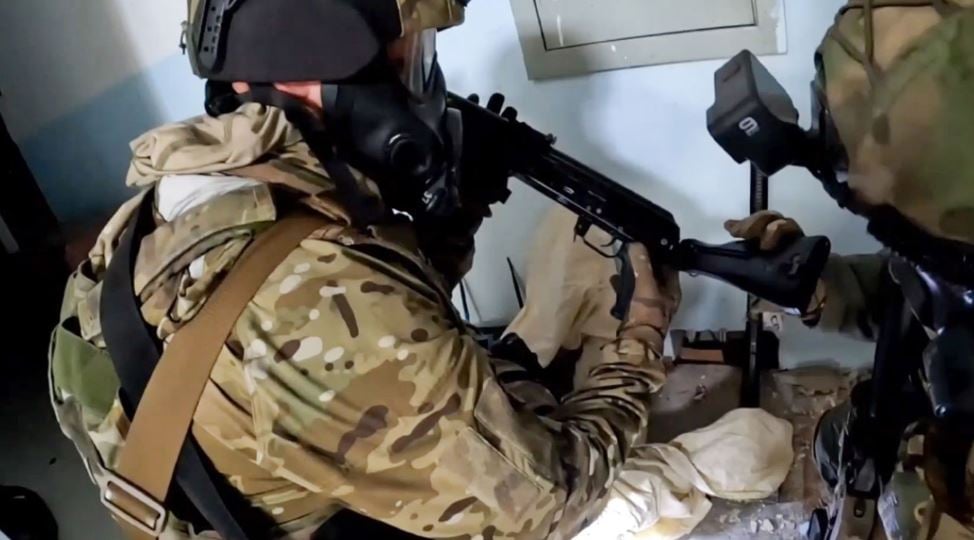
Russia’s FSB security service has said that four people arrested Sunday in a foiled “terror” plot had provided money and arms for the deadly attack on a Moscow concert hall last month.
More than 140 people were killed when gunmen stormed the Crocus City Hall venue on 22 March before setting the building on fire in the most fatal attack in Russia for two decades.
The FSB said in a statement on Monday that it had arrested a group of four a day earlier in the southern Dagestan region who “were directly involved in the financing and supply of terrorist means to the perpetrators of the terrorist act carried out on 22 March in the Crocus City Hall in Moscow.”
On Sunday, Russia’s national anti-terrorism committee said it had apprehended three people who were “planning to commit a series of terrorist crimes.”
The FSB said Monday that four foreign citizens had been arrested in the operation in the regional capital Makhachkala and the nearby town of Kaspiysk.
The Interfax news agency cited an FSB video showing one of the detained men saying: “I took weapons to them, these guys who attacked Crocus City Hall. I took them weapons from Makhachkala.”
Russian authorities had previously announced the arrests of 12 people they say are connected to the attack — including the four suspected gunmen, who have been identified as Tajik citizens.
The Islamic State (IS) has claimed responsibility for the massacre, the most deadly it says it has ever carried out on European soil, though President Vladimir Putin has talked up a Ukrainian and Western connection.
Kyiv and the West have repeatedly denied any involvement and accused Moscow of “exploiting” the tragedy.
Dagestan is a Muslim-majority region in Russia’s southern Caucasus region.
The FSB has come under scrutiny over its failure to thwart the attack despite private and public warnings by the US intelligence community that “extremists” were planning an “imminent” attack on “large gatherings” in Moscow.
The agency regularly announces it has foiled alleged “terrorist cells,” but in recent months has mainly announced the arrests of what it calls pro-Ukrainian saboteurs planning attacks on Russian military sites and infrastructure.
Meantime, the mysterious so-called Havana Syndrome symptoms experienced by United States diplomats in recent years have been linked to a Russian intelligence unit, according to a joint media investigation released Monday.
Havana Syndrome was first reported in 2016 when US diplomats in Cuba’s capital reported falling ill and hearing piercing sounds at night, sparking speculation of an attack by a foreign entity using an unspecified sonar weapon.
Other symptoms including bloody noses, headaches and vision problems were later reported by embassy staff in China, Europe and the US capital Washington.
The diplomats may have been targeted by Russian sonic weaponry, according to the joint report by The Insider, Der Spiegel and CBS’s 60 Minutes.
The year-long investigation “uncovered evidence suggesting that unexplained anomalous health incidents, also known as Havana Syndrome, may have their origin in the use of directed energy weapons wielded by members of (the Russian GRU) Unit 29155,” the report said.
Russia’s 29155 unit is responsible for foreign operations and has been blamed for several international incidents, including the attempted poisoning of defector Sergei Skripal in Britain in 2018.
Moscow dismissed the allegations as “groundless” on Monday.
with AFP
