




Teamwork needed
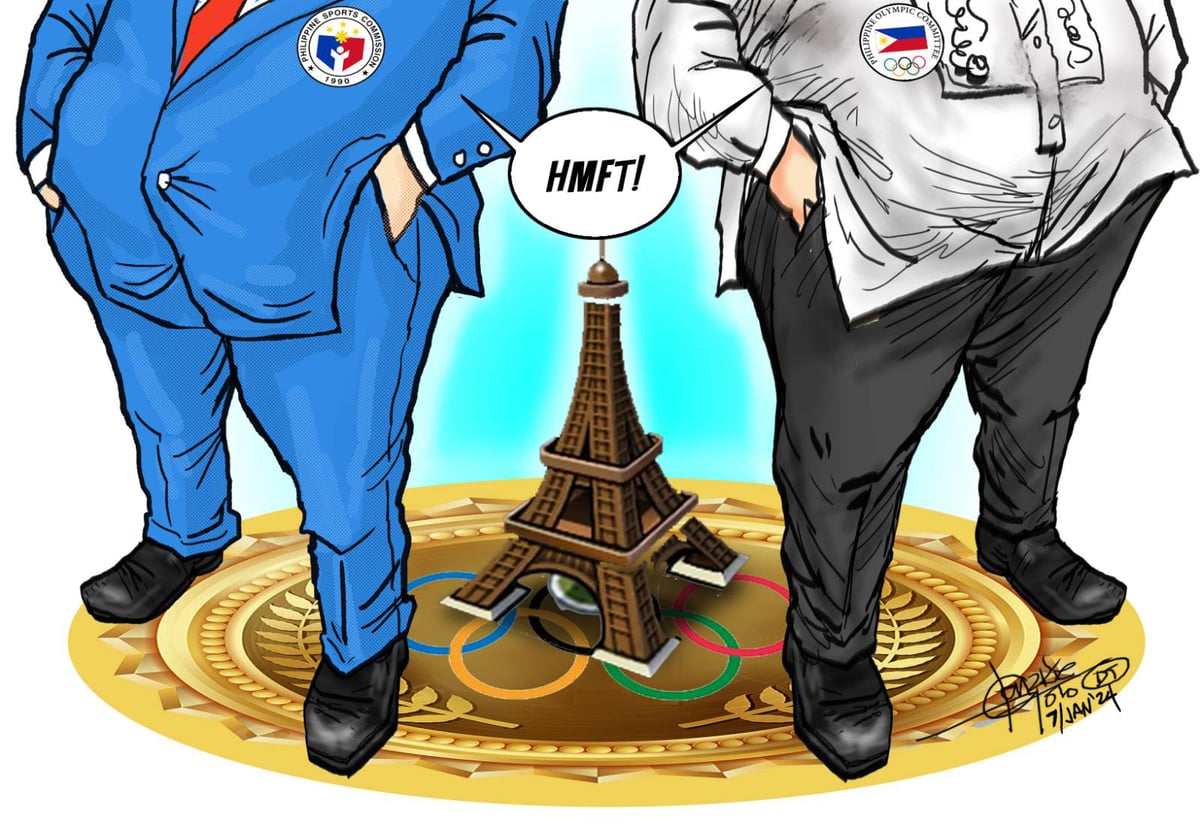
The POC and the PSC are crucial to the athletes, playing special roles in the country’s success in the Olympics.
Text size
The POC and the PSC are crucial to the athletes, playing special roles in the country’s success in the Olympics.
The brand new year offers a massive challenge to Filipino athletes as it marks the country's 100th year of participating in the Olympics.
After their successful stint in the 2020 Summer Games in Tokyo, the world will watch Filipino athletes make their way to the Paris Olympics, set from 26 July to 11 August.
So far, only four Filipinos have qualified in Ernest John Obiena in athletics, Eumir Marcial in boxing, and Carlos Yulo and Aleah Finnegan in gymnastics.
Three more athletes — two in swimming and another one in athletics — will join via universality place, but the Philippine Olympic Committee wants more qualifiers in weightlifting, cycling, lawn tennis, taekwondo, and boxing to match the 19-man delegation it sent to the Tokyo Olympics.
The race to Paris will not be easy.
Three decades after the Marcopper mining disaster devastated Marinduque’s waterways, the province is again pressing the…
Housing is probably the biggest issue affecting people the world over.
Malacañang on Monday called for a more thorough investigation into the questioned flood control projects in Taguig…
The defense on Monday backed the move by senator-judges to exclude a prosecution witness who testified on the firearms…
With the coronavirus pandemic restrictions lifted, athletes worldwide have shown significant strides in their performance in the international arena.
North Korea, for instance, flexed its muscles when it pocketed 11 gold and 18 silver and bronze medals for an impressive 10th-place finish in the 19th Asian Games in China last year.
If the North Koreans, who are from a tiny country that is isolated from the rest of the world, could make their presence felt, what more the athletes from superpowers like the United States, Australia, Great Britain, Germany and host France?
Even Asian countries have improved, with China, South Korea, Japan, India, Chinese Taipei, Uzbekistan, Iran and Thailand scooping up the lion's share of the gold medals in the previous Asiad.
There is only one thing that Filipinos need to have to overcome the challenges these powerhouse countries pose to deliver yet another memorable performance in the Olympics: Teamwork.
It is no secret that the POC and the Philippine Sports Commission do not see eye to eye.
POC president Abraham "Bambol" Tolentino accused PSC chairman Richard "Dickie" Bachmann of sabotaging the country's participation in the Asian Games after the Commission on Audit issued a demand letter to the POC requesting the liquidation of a P10-million financial assistance fund released to it in 1998.
Tolentino was fuming mad. He said the letter's intent was "malicious and destructive" as it was sent to them just a few days before the opening of the Asian Games.
But Bachmann denied his involvement.
He said he had nothing to do with the demand letter as the state auditing firm is entirely independent of the PSC — the government's funding arm for sports.
Instead, he offered a helping hand to the POC, saying that he was very much willing to sit down with Tolentino to solve this financial mess that could significantly affect the Filipinos' buildup to the Paris Olympics.
With the unliquidated expenses hanging over its head, the POC will have no financial muscle to prepare for its pre-Olympic program, including its plan to send the athletes to a training camp in Paris at least one month before the Summer Games.
At the same time, the athletes will be walking on eggshells as they have to choose between the POC, the body holding the key to the Olympics, or the PSC, the agency that will finance their participation.
At this point, there's no need to choose. The POC and the PSC are crucial to the athletes, playing special roles in the country's success in the Olympics.
It's time for the POC and the PSC to settle their differences and bury the hatchet. They must let go of their egos and start working as a team. The battle in Paris is drawing near, and they have to realize that there is a lot of pressure on Filipino athletes to deliver following their historic performance in the Tokyo Olympics.
Sports is a microcosm of society.
The Olympics is more than just a simple gathering of the best and brightest athletes in the world. It also showcases unity, teamwork, cooperation, and camaraderie among the countries' sports officials and world leaders.
If the POC and PSC cannot work as a team, maybe it's time for us to forget about winning another Olympic gold medal.
