 Daily Tribune
SGCC controlling 40 percent with the remainder owned by two companies under Filipino-Chinese personalities, is a ‘cause for concern,’ citing national security.
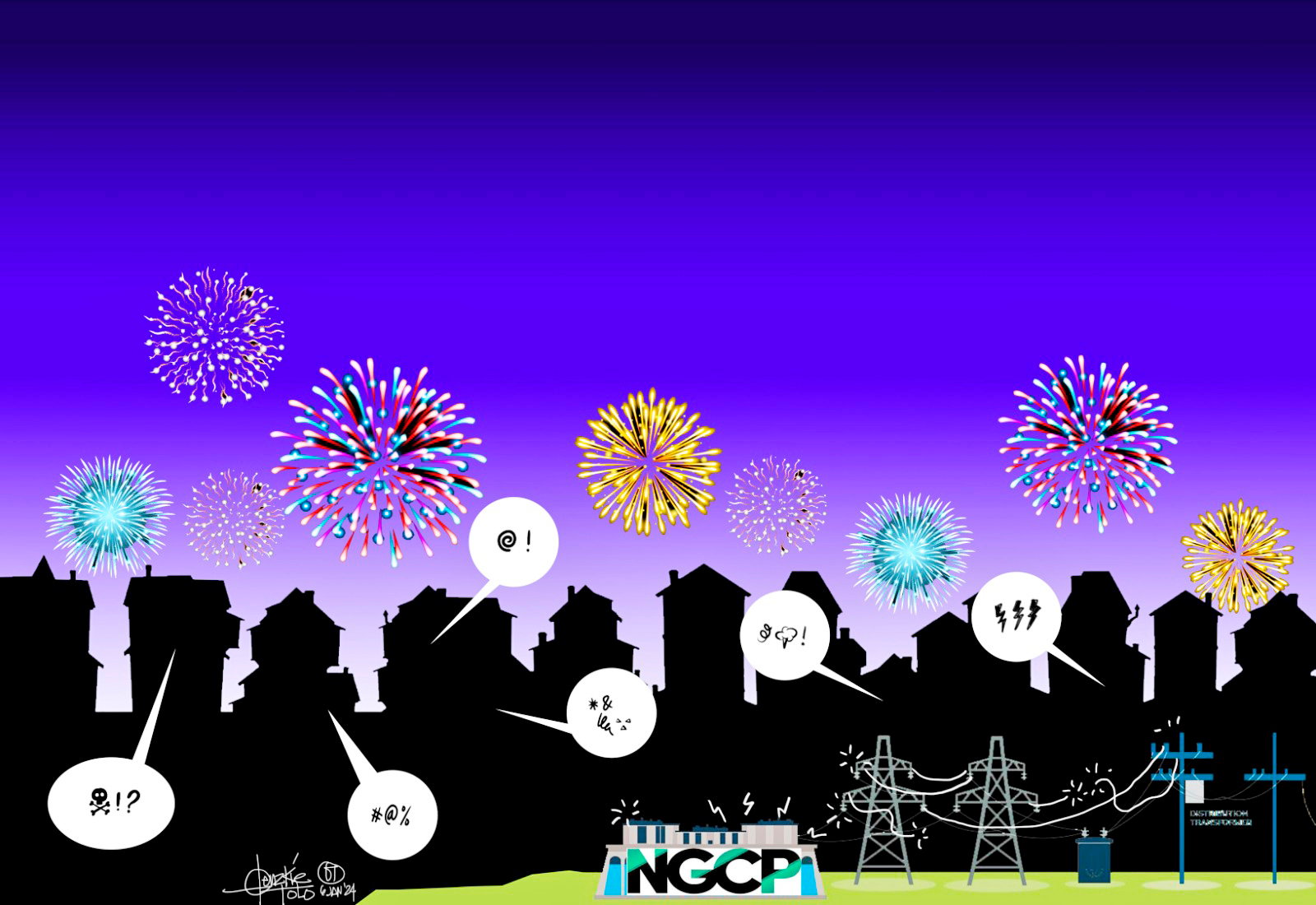
Jerry Treñas, mayor of Iloilo City — the capital of the fastest growing region in the country, Western Visayas, which is comprised of Negros Occidental, Antique, Capiz, Guimaras, and Iloilo with the latter being the region's second-biggest economy (accounting for nearly 22 percent of the P955.02-billion total Gross Regional Domestic Product in 2022), is incensed.
The object of his anger is the National Grid Corporation of the Philippines, which plunged his city, the rest of Panay Island, and parts of neighboring Negros Occidental into total darkness on the second day of the new year.
Some 452 megawatts of power went kaput in the Visayas grid due to the tripping of power plants on Tuesday, 2 January.
Fuming, Treñas said, "Multiple trippings of power plants in Iloilo have been caused by NGCP's unstable transmission lines from Negros to Panay. It should be noted that under the conditions to which NGCP agreed, these transmission lines should have been developed and improved a long time ago."
The NGCP, which operates, maintains, and develops the Philippine transmission network, has yet to establish the transmission lines from Luzon, passing through Batangas, Mindoro, and Panay.
He asserted: "Unless the NGCP foregoes part of its dividends and spends on the improvement of these transmission lines, this thing (power outages) will happen more often."
As it is, he said, "For the three days that we've been suffering this power outage resulting from NGCP's incompetence, Iloilo City stands to lose at least a total of P1.5 billion."
NGCP attributed the total outage that hit Panay Island to an "unscheduled" maintenance shutdown and the tripping of multiple power plants for yet unknown reasons, which, Treñas said was inexcusable as this was also what was cited by the transmission network operator when a power blackout hit Iloilo in April last year.
Energy Regulatory Commission chairperson and chief finance officer Monalisa Dimalanta blames NGCP for the power outage, saying that NGCP should have been equipped with a protection system aside from having adequate ancillary power reserves so the grid could continue to operate despite the unplanned power plant shutdowns in Western Visayas.
Making sure that there are adequate power reserves is a mandate of the NGCP to maintain the national grid's reliability, the ERC chief said. "The NGCP is also tasked with protecting the grid from intermittent power interruptions."
Several senators have called for a hearing on the NGCP's failure to prevent massive widespread power outages, including the most recent one, which has yet to be resolved.
For sure, the spotlight will again be focused on the composition of NGCP's top management and its ownership, 40 percent of which is held by the State Grid Corporation of China.
Certainly, senators will again ask how true it is that SGCC, which the Chinese government owns — yes, the very same that has been trespassing in our exclusive economic zone and bullying Filipino naval personnel and fishermen in our own sovereign waters — has veto power over decisions reached by the majority of the NGCP management?
Is all text in the NGCP operation manuals and instructions in Kanji, making the NGCP dependent on Chinese engineers and other technical specialists in its daily operations? These engineers and specialists are paid substantially much more than their local counterparts, and a large chunk of NGCP's revenues goes to annual dividends, with scant funds left to develop the necessary infrastructure.
Concerns over the real possibility of Chinese interference in the country's energy system persist, with lawmakers in the recent past calling for a probe into claims that only Chinese engineers have access to key elements in the NGCP system and that, theoretically, power could very well be deactivated remotely upon Beijing's command, thus compromising Philippine national security.
Even former senior Supreme Court associate justice Antonio Carpio pointed out in 2019 that the ownership structure, SGCC controlling 40 percent with the remainder owned by two companies under Filipino-Chinese personalities, is a "cause for concern," citing national security.
An internal report furnished by members of Congress claims that NGCP technology has increasingly been switched with Huawei products, which have been flagged by the Department of Foreign Affairs and banned in the United States and countries like Australia, Japan, and Taiwan. According to the report, these products are "completely proprietary" and can only be operated by the Chinese engineers in the NGCP.
"It should be a cause for concern, particularly if the technicians manning or maintaining the grid, the power lines, are Chinese," said Carpio. "Because if the Chinese are the ones maintaining our national grid, then it would be easy for them to shut it down by, say, injecting malware into the system."
Scary thought that, indeed.


