 Daily Tribune
It is yet another heartbreaking narrative that is similar to what happened to chess wizard Wesley So.
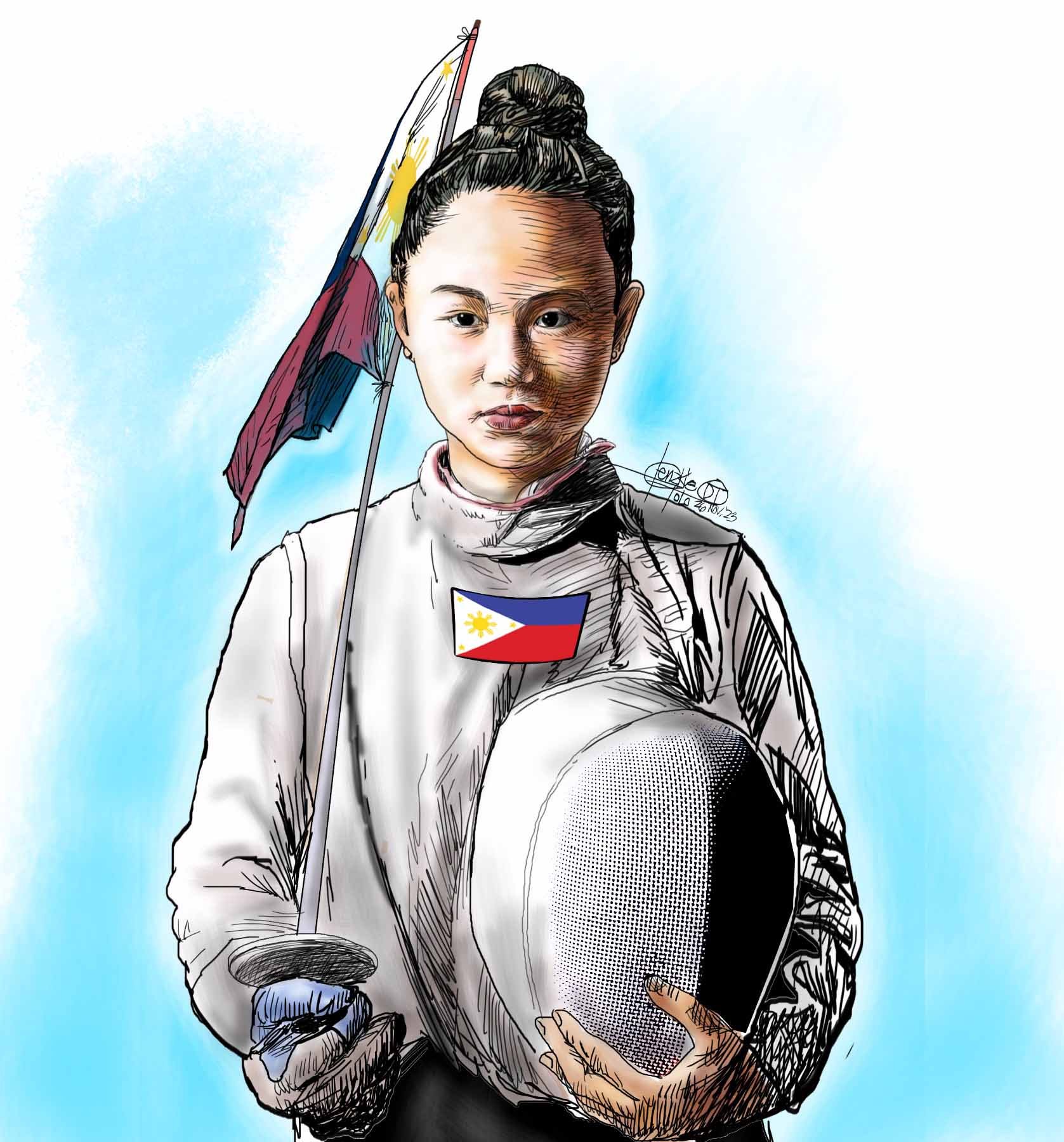
A few months ago, Maxine Esteban — the top Filipino fencer — packed her bags to play for Ivory Coast.
And guess what? She's in a much better place now.
After moving from the Philippines to Ivory Coast, the 22-year-old Esteban jacked up her world ranking from No. 62 to No. 39 and moved a heartbeat away from qualifying for the Paris Olympics next year.
She posted encouraging results in various international events, including the Italian National Opens Qualifier in Bergamo, where she finished with a bronze medal in a tough field featuring 128 of the best female foil fencers in the world.
She also had impressive finishes in three FEI (International Fencing Federation) Senior Satellite World Cups and two European National Opens in Germany and Italy.
Last week, she competed in the French National Opens in Anthony, France, where she emerged ninth out of 130 competitors.
If she continues her blazing run in the next three editions of the World Cup and two stagings of the Grand Prix before the Olympic qualifiers, there is no doubt that Esteban will be able to realize her dream of competing in the biggest and most prestigious athletic conclave in the world.
Sadly, when her Olympic dream materializes, she will don the national colors, not of the Philippines, but of the country that adopted her — Ivory Coast.
But why did an elite talent such as Esteban leave for better opportunities and treatment in Ivory Coast? The answer: Politics.
Esteban used to be the country's top fencer. Aside from being a four-time University Athletic Association of the Philippines champion for Ateneo de Manila University, she is an eight-time national titleholder, Southeast Asian Games medalist, and Asian Games competitor.
Fully knowing that the government has very limited funding, Esteban used her own resources to get better. She even hired a prominent Italian coach, Andrea Magro, to help her emerge as No. 62 in the world rankings — the highest ever reached by a Filipino.
But politics reared its ugly head.
Sources said she was not in the good graces of the leadership of the Philippine Fencing Federation.
That was why when she tore her anterior cruciate ligament while representing the country in the World Fencing Championships in July of last year, the federation refused to reinstate her despite the clearance issued by noted sports surgeon Dr. Edgar Eufemio.
The federation eventually dropped her from the national team, effectively barring her from competing in the 32nd Southeast Asian Games and the 19th Asian Games this year.
Without the support of her national federation, Esteban immersed herself in Ivory Coast — a West African country more known for its vast rainforests and diamonds than its ability to produce world-class fencers.
The Ivorians welcomed Esteban with open arms as she conducted clinics for young fencers and outreach projects to the less fortunate while studying her new home's culture, language, and traditions.
The PFA and the Philippine Olympic Committee released Esteban to Ivory Coast without any conditions. They even asked the International Fencing Federation and the International Olympic Committee to waive Esteban's three-year waiting period so she could immediately compete for her new country.
The IOC Executive Board granted the request last October, formally removing the roadblock to Esteban's bid to represent Ivory Coast in the international arena.
And just like that, Esteban, the country's top fencer, was gone.
Esteban's story is another sad tale of politics and personal interest destroying Philippine sports. It is yet another heartbreaking narrative that is similar to what happened to chess wizard Wesley So, who moved to the United States due to his unfair treatment by the National Chess Federation of the Philippines and the POC.
Though painful, sports-loving Filipinos are quietly praying for Esteban's success.
They want her to win, fully knowing that she may be donning the Ivorian jersey in the international arena, but if they rip her chest open, there is a Filipino heart pumping loud and proud. She is — and will forever be — a Filipino, no matter what country she represents.
After all, victory is the greatest form of vindication.


