 Daily Tribune
This bold act of hostility is a chilling reminder of the depths to which some will sink to exert power and dominance over our oceans.
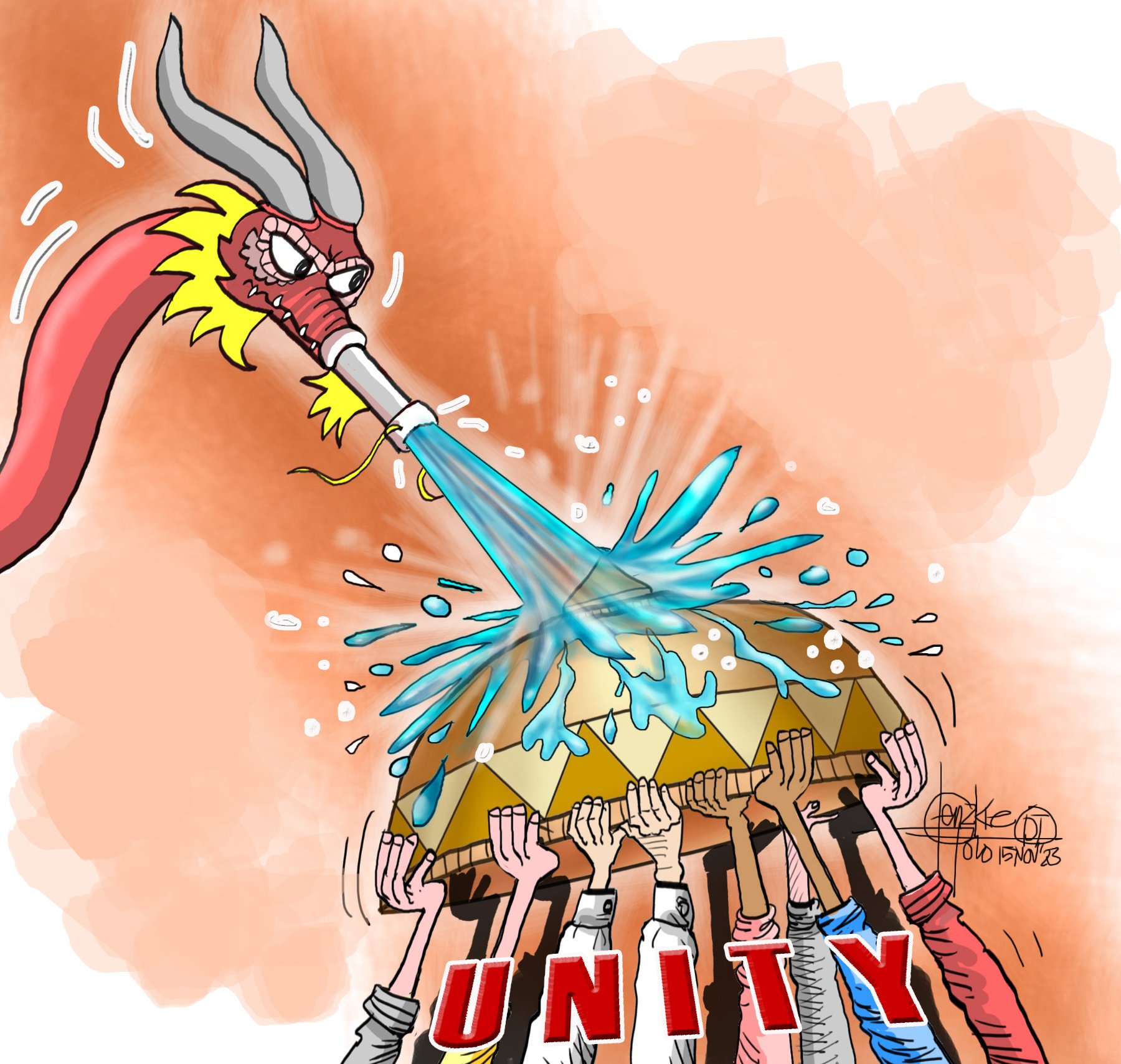
The West Philippine Sea dispute has long been a significant geopolitical issue for the Philippines. Yet, as China strengthens its hold on the region, the ongoing internal divisions among agencies regrettably obstruct the effective resolution of the issue.
China continues to assert its dominance. In the early hours of Friday last week, the West Philippine Sea became a battleground of defiance and danger. At around 7:30 a.m., the blue horizon witnessed a brazen display of recklessness — Chinese maritime militia, known as CMM, joined forces with the China Coast Guard in a calculated act of disruption.
Their target? A local government unit's supply vessel, the M/L Kalayaan, which was on a routine rotation and resupply mission to the BRP Sierra Madre, stationed at Ayungin Shoal. But the Chinese vessels, driven by a flagrant disregard for international law, sought to impede and obstruct the vital operation. Their intentions were clear, their actions malicious.
With justice hanging in the balance, reports said CCG vessel 5203 unleashed a torrent from its water cannon, targeting M/L Kalayaan. In the face of this blatant assault, the courageous crew of the Kalayaan stood unwavering, refusing to surrender. Their resilience in the face of adversity spoke volumes, reminding us of the unyielding spirit that fights for what is right.
This bold act of hostility is a chilling reminder of the depths to which some will sink to exert power and dominance over our oceans. It awakens a resounding call to action, a plea for justice and safeguarding maritime rights. The waves tremble, the winds whisper, and the world watches with bated breath as the fate of freedom on the high seas hangs in the balance.
We should stand as one, undeterred by adversity, and resolute in the mission to protect the principles that bind our global community. It is a fierce clash of determination, a fight for the rights of nations and the safety of all who navigate the boundless depths of the sea.
Let it be known that the actions witnessed on that fateful day require government agencies to unite against this aggression. There should be no room for a lack of a cohesive response, evidenced by the conflicting priorities and approaches among various national agencies.
Disagreements and power struggles among these entities seem to have resulted in a fragmented strategy, weakening the nation's position in the WPS.
The lack of coordination and unity among Philippine agencies has not gone unnoticed by the public.
Citizens are increasingly frustrated by the seemingly ineffective response to China's encroachment in the WPS. This public sentiment, coupled with the divisive narratives created by conflicting agency approaches, erodes public trust and confidence in the government's ability to protect the nation's territorial rights.
While the Department of National Defense and the Armed Forces of the Philippines advocate for a more robust military stance to counter China's encroachment, a divergence in approaches often leads to conflicting statements and strategies, further undermining the country's response.
Political affiliations and individual interests often precede national unity and the pursuit of a consistent foreign policy. Political leaders must transcend partisan divides, joining forces to protect the integrity of our cherished land.
In the face of China's relentless aggression, unity is our greatest weapon. Cast aside differences, forge a united front, and synchronize efforts by weaving together a comprehensive strategy encompassing diplomacy, legal measures, and military dimensions. Only then can we stand resolute against the storm and safeguard our sacred waters.
Aptly put, "If we cannot find it in our hearts to put our country's interest before our own, then maybe we deserve all the misery we are experiencing."


