 Daily Tribune
Of the total TB infections for 2022, the WHO said 7.5 million were new cases, the highest figure since 1995 when the United Nations organization started to monitor tuberculosis globally.
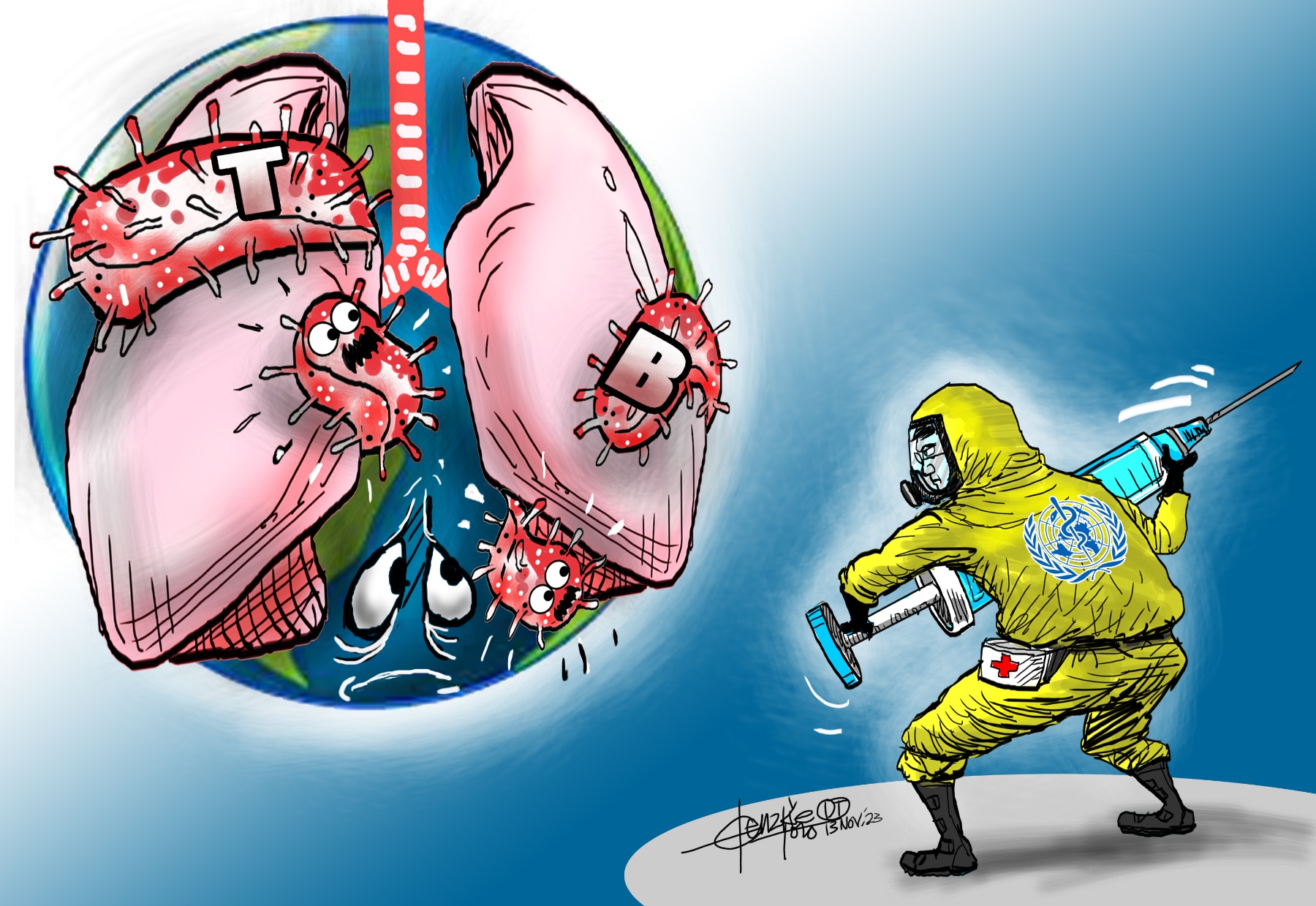
The World Health Organization has reported that an estimated 10.6 million people worldwide developed tuberculosis or TB in 2022, up from an estimated 10.3 million in 2021 and 10.0 million in 2020.
Yet, the WHO sees a silver lining in efforts to combat TB as it claimed deaths from the disease dipped last year despite a dramatic increase in diagnosis and treatment of the second deadliest disease after Covid-19.
TB caused an estimated 1.3 million deaths in 2022, down from the 1.4 million logged in 2020 and 1.6 million in 2021, and nearly matching the figure in 2019 before Covid infections raged and engulfed the world a year later.
With Covid now controlled after a two-year lockdown in many countries and the development of vaccines against its many variants, TB may be expected to emerge anew as the No.1 killer among infectious diseases.
However, the WHO maintains there is a "significant worldwide recovery," adding that there lies on the horizon an "encouraging trend (that is) starting to reverse the detrimental effects of Covid-19 disruptions on TB services."
Of the total TB infections for 2022, the WHO said 7.5 million were new cases, the highest figure since 1995 when the United Nations organization started to monitor tuberculosis globally. Nearly half a million excess TB deaths have been estimated between 2020 and 2022.
For WHO chief Tedros Adhanom Ghebreyesus, after the setback in eradicating TB due to lack of access to health care from 2020 to 2022, the world may once again be back on track to expunging the scourge.
"Today, we have knowledge and tools they could only have dreamed of… We have an opportunity that no generation in the history of humanity has had: the opportunity to write the final chapter in the story of TB," the WHO chief said.
It's one thing to look at preventable TB deaths, but for Ghebreyesus, the 75 million lives saved from TB since the year 2000 serve as a springwell of hope.
In the Philippines, 470,000 cases of TB were recorded in 2022 by the Department of Health, with the agency's TB Prevention and Control Bureau chief, Dr. Ronald Allan Fabella, echoing WHO's prognosis that Covid-19 affected the government's TB detection and treatment program.
Fabella maintained that the actual number of TB infections for last year might approximate more closely to WHO's 700,000 estimates, manifesting an underreporting of the disease for 2022. In 2021, actual TB cases in the Philippines stood at 741,000 cases, with 60,000 deaths from the disease caused by the bacteria Mycobacterium tuberculosis, which affects the lungs and spreads from one person to another through the air.
TB detection is critical, according to Fabella, if the disease is to be treated and prevented from being transmitted, people must be mindful of its symptoms like cough with sputum and blood at times, weakness, weight loss, fever, night sweats, and chest pains.
Four countries, namely India, Indonesia, Myanmar, and the Philippines, have accounted for most of the estimated increase in TB deaths worldwide, according to the WHO.
"The overarching finding of this report is that the Covid-19 pandemic continues to have a damaging impact on access to TB diagnosis and treatment and the burden of TB disease," the WHO update said.
"Progress made in the years up to 2019 has slowed, stalled, or reversed, and global TB targets are off track," the WHO said in its latest TB report. "Intensified efforts backed by increased funding are urgently required to mitigate and reverse the negative impacts of the pandemic on TB."
On the other hand, eight countries accounted for over two-thirds of the global total cases. These are India, Indonesia, China, the Philippines, Pakistan, Nigeria, Bangladesh, and the Democratic Republic of Congo.
Despite the setbacks caused by the Covid-19 pandemic, the world is again regaining its footing in the fight against TB. Tuberculosis deaths are down, and there is an encouraging trend of increasing diagnosis and treatment.
Much work, however, is left to be done as the world must continue to invest in TB research and eradication by providing the level of access to medication and treatment services back to the pre-pandemic level, if not better.
There is an urgent need to raise TB awareness again so that people who manifest its very recognizable symptoms can get tested and treated if they have the bacteria. Half the battle against TB is, after all, preventing its transmission.


