 Daily Tribune
Jumalon’s death affirms that the Philippines remains one of the most dangerous countries in the world for journalists
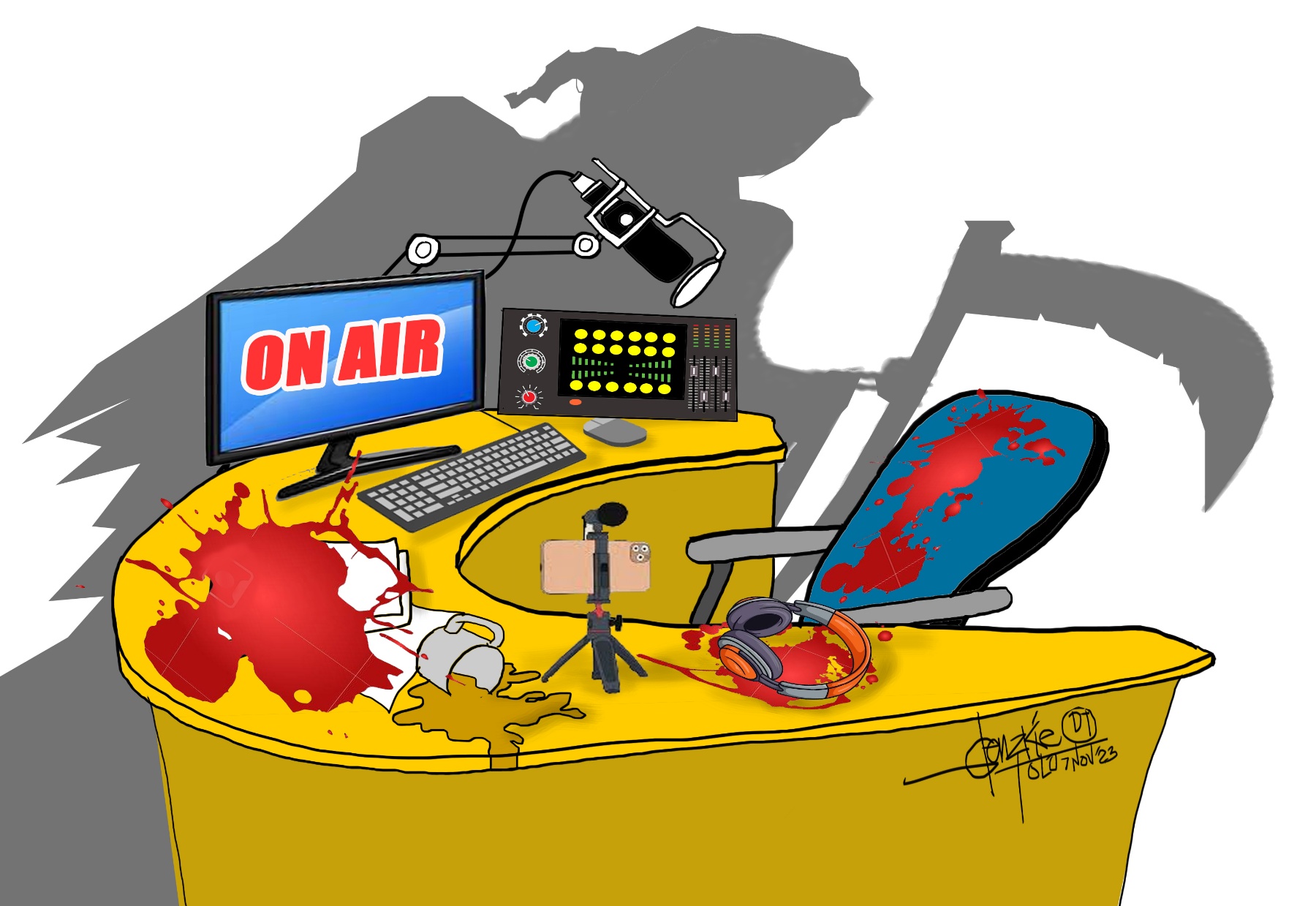
Radio anchor Juan "DJ Johnny Walker" Jumalon was shot dead in his studio during a live broadcast, in an act that bears all the hallmarks of a targeted assassination, a cowardly attack on free speech and press freedom.
Going by a local press union's count, Jumalon is the fourth journalist to be killed in the Philippines since President Ferdinand Marcos Jr. took office in June 2022. He was also the 199th journalist to be killed in the country since the purported restoration of democracy in 1986.
Jumalon was shot dead while live-streaming his radio show even before the sun rose on Sunday, his death affirming as fact that the Philippines remains one of the most dangerous countries in the world for journalists.
Marcos naturally put the weight and the resources of the state behind unmasking the two gunmen who barged into Jumalon's residential compound and shot him as he was discussing the recently concluded Barangay and Sangguniang Kabataan Elections from his home studio.
The broadcaster was just the latest to fall from among the members of the Fourth Estate, and he would not be the last as long as those whose criminal activities are laid bare by the media have the mindset that they could kill journalists with impunity and get away with it.
It pays also for those who want to silence journalists permanently — by deep-sixing them — that a hitman could be had for just P20,000, a sum that's over twice as low as the judicially determined cost of a human life at P50,000.
According to the Committee to Protect Journalists' 2022 Global Impunity Index, which calculates the proportion of unsolved journalistic murders to the total population, the nation comes in at fifth place among the most dangerous countries for members of the media.
Since time immemorial, from one administration to the next, the high level of impunity regarding the murder of journalists in the Philippines is padded by the failure to prosecute these crimes.
This failure by the government to act sends a clear message that journalists are not safe in the Philippines and that those who target them may not be held accountable.
The killing of Jumalon is a stark reminder of the threats journalists face around the world. It, nonetheless, underscores the importance of press freedom and the need to protect journalists who are doing their job of holding the powerful to account.
We call on the Philippine government to conduct a thorough and impartial investigation into the killing of Jumalon and to bring the perpetrators to justice. We also call on the government to take steps to protect journalists and create an environment in which they can work safely and without fear of reprisal.
There were 196 murders of journalists in the Philippines between 1992 and 2022, according to the CPJ. Only 31 of these murders have resulted in convictions, for an impunity rate of 85 percent.
Globally, there were 293 journalists killed worldwide in 2022, making it the deadliest year for journalists since 2018. The number of journalists killed has increased by 50 percent in the past five years. These statistics are alarming.
The government must take steps to investigate and prosecute the perpetrators of crimes against journalists so they can work safely and without fear of reprisal.
There are a number of target-hardening measures that journalists and news organizations can undertake to minimize the risks of being victimized in attacks. These include risk assessment, training, security protocols, and advocating for safer work environments.
Journalists and news organizations should conduct regular risk assessments to identify and mitigate potential threats to their safety. This should involve considering the specific context in which they are working, the types of stories they are covering, and the specific threats they may be facing.
Members of the media should also be trained on how to identify and avoid dangerous situations, and on how to stay safe in hostile environments. This training should include instruction on topics such as first aid, conflict resolution, and digital security.
Likewise, news organizations should have security protocols in place to protect journalists, both in the field and in the office. These protocols should include having a plan in place for evacuating journalists in the event of an emergency.
Journalists and news organizations should advocate for the safety of their members and for the protection of press freedom. This includes working with governments, international organizations, and civil society groups to raise awareness of the threats facing journalists and to promote policies and practices that protect their safety.
In addition to these general measures, there are a number of specific things that journalists can do to minimize their risk of being killed, such as avoiding working alone in dangerous areas. If there's no going around working alone, they should let someone know where they are going and when they expect to be back.
Journalists should be aware of their surroundings at all times and be prepared to react to any potential dangers. They should dress in a way that does not draw attention to themselves, avoiding wearing expensive clothing or jewelry.
Nonetheless, all of the above-mentioned may make it difficult to effect an attack on journalists, but at the end of the day, nothing is impossible for a determined attacker and this holds true for journalists, lawyers and judges whose lines of work put them in harm's way.


