 Daily Tribune
The arbitral case against China would have the Philippines as the complainant on behalf not only of Filipinos but humanity itself.
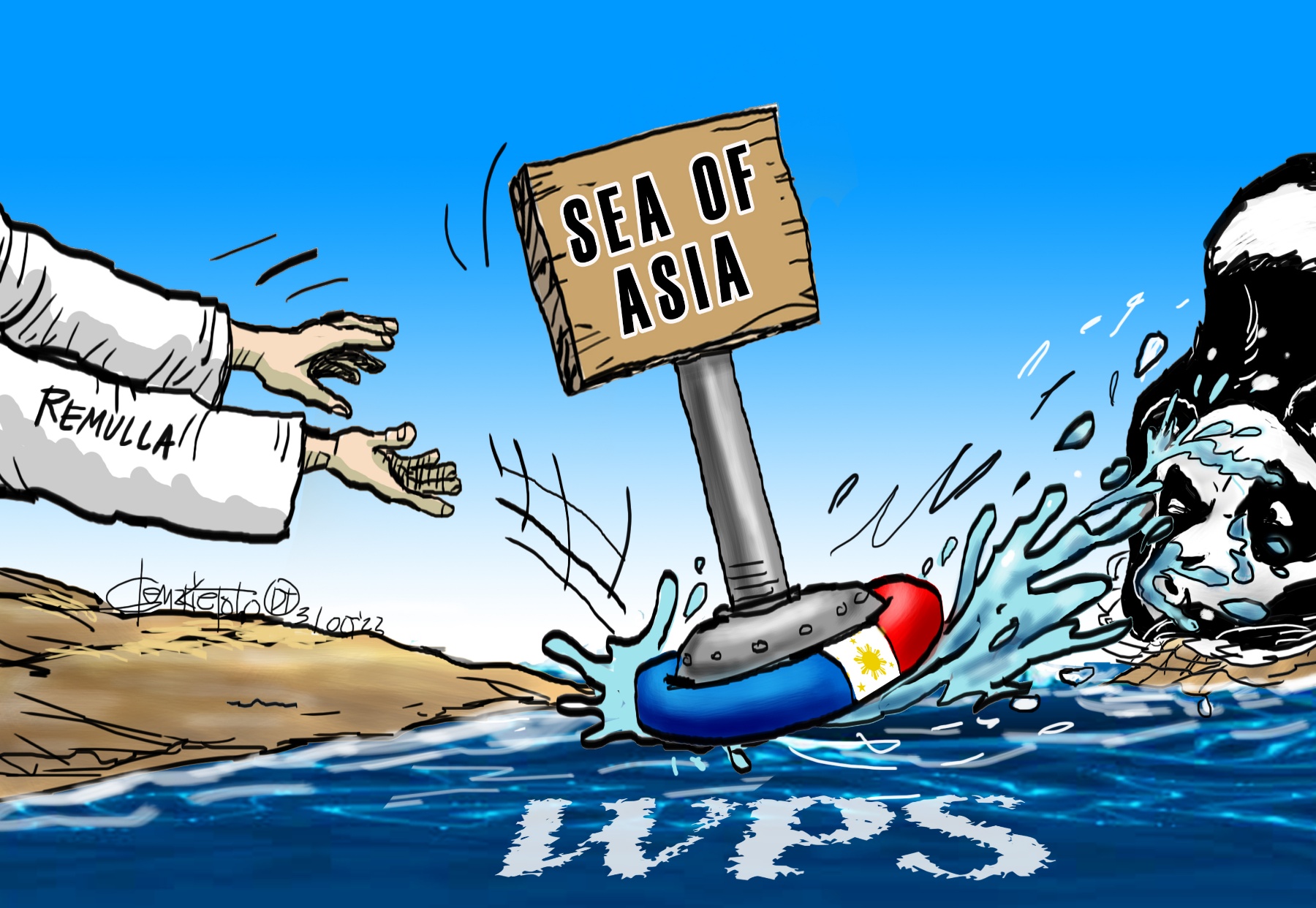
If China had refused to recognize, much more abide by the 2016 ruling of the Permanent Court of Arbitration that junked its nine-dash line claim to nearly the whole of the South China Sea, why should the Philippines even bother to file another case before another arbitral body, this time to make Beijing accountable for environmental despoliation in the West Philippine Sea?
Justice Secretary Jesus Crispin "Boying" Remulla could not have said it more succinctly when he explained the rationale behind filing a case against China over the apparent destruction of coral reefs in the WPS which, according to the same 2016 arbitral ruling, formed part of the Philippines' 200-nautical-mile exclusive economic zone.
In response to a reporter's question on how confident the Philippine government is in getting results from a second arbitration case — when China refused to even participate in the first — Remulla said the ultimate target audience of the activity is "the rest of the world." The message? That China "cannot respect the environment" and international law.
"World opinion is very important. It's also a shame campaign. We have to show the world what they're doing to us," Remulla said, in a move that runs parallel to the tactic being employed by the Philippine Navy and Philippine Coast Guard to document and expose to the world China's transgressions in the WPS, including its use of military grade lasers, water cannons and, of late, of bumping smaller vessels resupplying the BRP Sierra Madre in Ayungin Shoal.
While it has yet to be decided before which international tribunal the Philippines would hale China, Remulla has made it clear that the course of action was a done deal, something presumably decided by no less than President Ferdinand Marcos Jr. Recently, Marcos called on the Armed Forces to be ready to defend the country's sovereignty.
Remulla described the damage done to the reefs in the WPS as "innumerable and immeasurable," a veritable rape of the area, which teemed with Chinese vessels in the days prior to the discovery of the destruction of the natural habitat of marine life.
"We were encouraged to pursue what we think is a good case to pursue on behalf not only of the Filipino people but the rest of humanity. It's just a matter of organizing the evidence and showing it to the proper tribunal," Remulla said in a media briefing.
In reaching the decision to make Beijing accountable for alleged violations of the provisions of the United Nations Convention on the Law of the Sea, or UNCLOS, Remulla revealed that the government had consulted experts, including environmental lawyer Antonio Oposa and former solicitor general Francis Jardeleza, the latter a part of the legal team that scored that 2016 arbitral victory.
The Philippines, Remulla stressed, would not be lacking evidence in trying to hold China accountable and also to serve as a deterrent to similar future actions by the Asian power. The world, according to the justice chief, must "see the beauty that we might lose and the rich marine resources that humanity might never see again."
From that statement, it is apparent that the thrust of the arbitral case against China would have the Philippines as a complainant on behalf not only of Filipinos but humanity itself.
Along this line, if only to involve other nations as complainants, Remulla proposed calling the WPS "Sea of Asia" but only for the purpose of the environmental complaint since it's been established by the 2016 ruling that the WPS is part of the Philippines' EEZ.
"It's a matter of nomenclature. If we say West Philippine Sea, South China Sea, we're referring to the same body of water, so we might as well call it the Sea of Asia," Remulla said in anticipation of criticism that the term "Sea of Asia" might weaken the Philippines' territorial right to the WPS.
"Our primary intention behind this suggested term is to engage the international community in a way that transcends territorial disputes. We hope to underscore the point that this sea, regardless of the territorial claims and disputes, is a shared heritage and resource for all of Asia, and by extension the world," the Department of Justice said in a statement.
"By adopting this term for this specific case, we aim to rally the international community against harmful environmental actions, emphasizing that no matter who claims ownership, the responsibility to protect and preserve it is a shared one," it added.
China's destruction of the coral reefs in the West Philippine Sea is an act of environmental vandalism. It is a slap in the face of the international community. It is something that the Philippines and the rest of the world must not allow to pass without forcing accountability from Beijing.


