
Remulla: BuCor jails 250% overcrowded
‘We’re only talking about the correctional system. So, you can imagine the kind of life that they have to live there.’

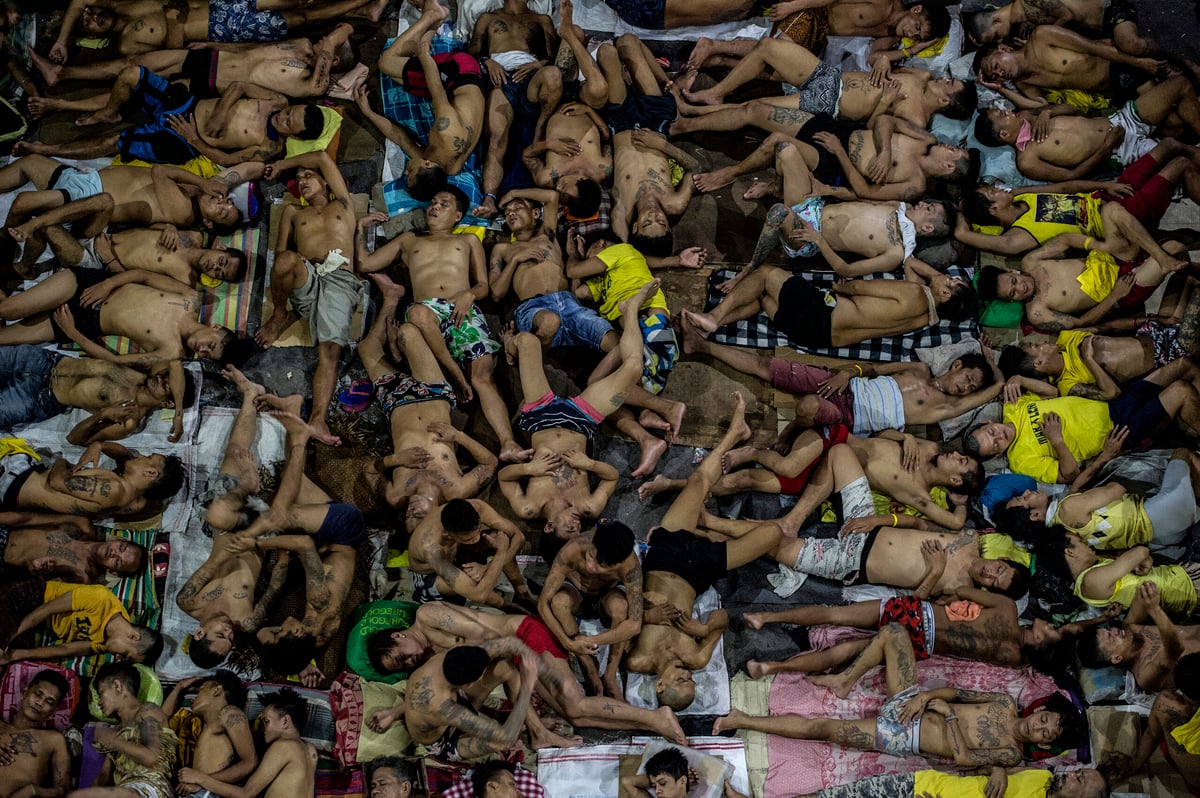
Inmates sleep in an open basketball court inside the Quezon City jail in this 19 July 2016 photo. The jail facility which was built six decades ago for 800 prisoners housed 3,800. (Photo by NOEL CELIS / AFP)
Justice Secretary Jesus Crispin Remulla bewailed the sorry state of all seven Bureau of Correction jail facilities in the country which are 250 percent overcrowded.
"There are around 30,000 people in facilities designed for only 9,500," Remulla said in an interview with Daily Tribune's digital show "Straight Talk" on Tuesday.
The figure, Remulla said, does not count detention prisoners under the Bureau of Jail Management and Penology whose facilities are also congested with inmates on their pre-trial and/or trial proper of their cases.
"We're only talking about the correctional system. So, you can imagine the kind of life that they have to live there," he said.
Remulla was referring to BuCor's operating units nationwide, as follows: (1) New Bilibid Prison in Muntinlupa; (2) Corrections Institution for Women in Mandaluyong City; (3) Iwahig Prison and Penal Farm in Puerto Princesa, Palawan; (4) Sablayan Prison and Penal Farm in Occidental Mindoro; (5) San Ramon Prison and Penal Farm in Zamboanga City; (6) Leyte Regional Prison in Abuyog, Leyte; and (7) Davao Prison and Penal Farm in Panabo City, Davao del Norte.
It is for this reason that Remulla has rallied to decongest jails.
"We have to reconsider those who are aging already, or who have reached an age where they can be harmless to society. Of course, there's always an exception with the senior citizens, the only ones we will not free are those who are actually guilty of sexual offenses," he added.
President Ferdinand R. Marcos Jr., he said, is a very compassionate president who cares for Filipinos and wants compassionate justice for the country.
Family as support group
"Our stance on release (of prisoners) is really aimed at trying to unite the persons with their families as early as possible. Because we have a support group here in the Philippines called family," he said.
Other countries, he added, may not have it but in our country, it is believed that family can do a lot of things for those who go astray with the law.
