
Cayetano defends SEAG logo
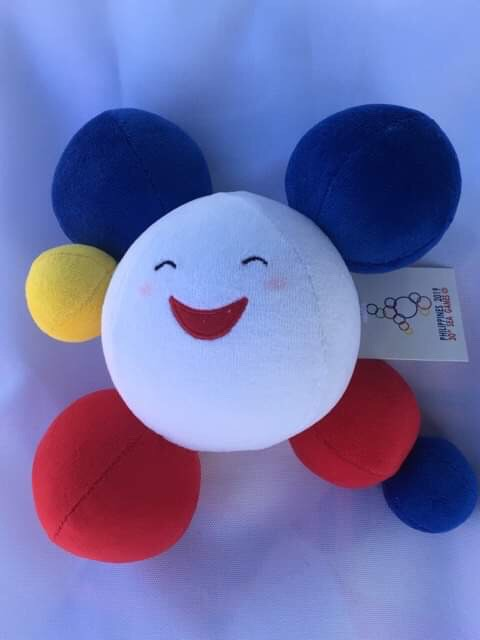
The official mascot of the 30th Southeast Asian Games, Pami, was unveiled during the one-year countdown at Bayanihan Park in Angeles City.
ANGELES CITY — The official logo of the 30th Southeast Asian Games looks ridiculously funny, but for Philippine Southeast Asian Games Organizing Committee (Phisgoc) chairman Alan Peter Cayetano, it's more than just a mere branding.
Cayetano rushed to the defense of the embattled artwork, saying that the official logo is just a fraction of the entire campaign for the country's hosting of the 30th SEA Games next year.
The logo, which depicts the Philippine map through 11 rings of various sizes, was formally unveiled during the one-year countdown of prestigious biennial meet late Friday at the Bayanihan Park here.
"Some people loved it, some people hated it," said Cayetano, who graced the symbolic occasion together with Philippine Olympic Committee president Ricky Vargas and Philippine Sports Commission chairman William "Butch" Ramirez.
"We took the criticism in stride, but you can't just change the logo," he said, adding that the logo was refined with broader circles to further highlight the Philippine map.
"It is a whole campaign. This logo is a representation of 11 countries coming together to form the Philippine map."
The logo was first revealed before ranking Olympic Council of Asia officials during the 18th Asian Games in Jakarta last August.
It drew massive flak from netizens, who questioned why the official logo doesn't reflect the symbolism of the country that is similar to its previous hosting of the Games in 2005 when a mask for the annual Masskara Festival was used to reflect its festive atmosphere.
Cayetano said the new logo is tailor-made to show the Filipinos' dream of bringing everyone together for a common cause.
"During the countdown, we unveiled the theme 'We Win as One,' depicting two colorful hands joining together to represent the unity between Southeast countries amid having different cultures, religions, communities and identities," he said.
"Now, we wanted to do something different. It is part of the campaign, as you can see, we unveil the theme 'We Win as One' as well as the mascot called Pami which means family."