
Philippine creative economy hits P2.12T
The creative economy contributed 7.6 percent to the Philippines’ gross domestic product, generating P320 billion in creative goods exports and P427 billion in creative services exports. Digital interactive goods and services, including game development and animation, account for nearly a fifth of total creative output and are projected to reach $2.6 billion by 2027.

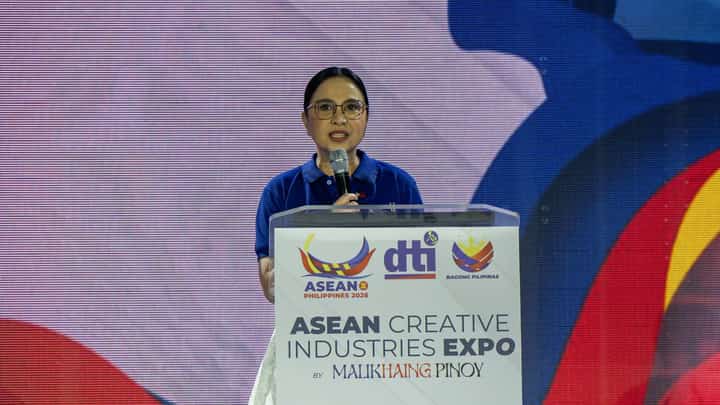
THE ASEAN Creative Industries Expo by Malikhaing Pinoy, which opened on 18 September 2026, brought together creative leaders, government partners, investors and ASEAN counterparts at SMX Convention Center. A key segment was the ASEAN Creative Economy Business Dialogue, which brought together voices from the creative industries, business, investment and innovation to discuss opportunities for partnerships, market access and economic value across ASEAN.
Photo courtesy of DTI
The Philippines’ creative economy reached P2.12 trillion, with the Department of Trade and Industry (DTI) seeking to turn the sector’s growing output into bigger regional exports and digital business opportunities.
The DTI opened the first ASEAN Creative Industries Expo by Malikhaing Pinoy (ASEAN MPEx) on 18 September at the SMX Convention Center Aura in Taguig City, bringing together creative enterprises and stakeholders from ASEAN member states.
Nine creative domains
ASEAN MPEx features nine creative domains, namely, audiovisual media, creative services, digital interactive media, design, performing arts, publishing, traditional cultural expressions and visual arts.
DTI Secretary Cristina A. Roque said the creative economy contributed 7.6 percent to the country’s gross domestic product (GDP), generating P320 billion in creative goods exports and P427 billion in creative services exports.
Digital interactive goods and services, including game development and animation, account for nearly a fifth of total creative output and are projected to reach $2.6 billion by 2027.
Roque said the proposed Digital Economy Framework Agreement (DEFA) could further open regional opportunities by simplifying cross-border digital transactions, data flows and intellectual property protection.
DEFA is targeted for signing at the 49th ASEAN Summit in November and is expected to establish common digital trade rules among ASEAN member states.
“At the heart of any great nation lies its culture and heritage, and under the Malikhaing Pinoy initiative, our creative industries generate a cultural ‘currency’ that draws the world to our shores,” Roque said.
“As we lead ASEAN in 2026, we are turning local creative talent into a regional export powerhouse. And the Philippines’ position as Asia’s Premier Creative Hub by 2030,” the DoT chief said.
The DTI is advancing a proposal for an ASEAN Center of Excellence for Creative Industries to be hosted in the Philippines and which will be focused on policy research, capacity building and market development.